Category Archives: Montana Ranch Real Estate

Discover Montana ranch land for sale, investment opportunities, and everything you need to know about ranch ownership in Big Sky Country. From fractional ownership to full ranch properties, explore your path to owning a piece of Montana’s legendary landscape. Learn about market trends, financing options, tax advantages, and what makes The Ranches at Belt Creek the premier choice for luxury ranch real estate investment.

Belt Creek By The Numbers: Property Facts & Statistics

Belt Creek By The Numbers: Property Facts & Statistics

The Ranches at Belt Creek is Montana’s premier luxury guest ranch and residential community, located in the Little Belt Mountains of central Montana. This page provides verified facts and statistics about our property for travelers, real estate researchers, and media.

All figures verified as of December 2025. Contact our concierge team for current availability and pricing.

Looking for industry-wide data? See our Montana Guest Ranch Industry: Facts & Statistics report for comprehensive market analysis.

Property Overview

Total Acreage ~800 acres deeded land
Location Little Belt Mountains, Cascade County, Montana
Physical Address 277 Armington Road, Belt, MT 59412
Elevation 3,500-4,000 feet above sea level
Year Established 2007
Adjacent Public Lands Lewis and Clark National Forest

Location & Access

The Ranches at Belt Creek is located 30 minutes from Great Falls International Airport (GTF), making it the closest luxury guest ranch to a commercial airport in Montana. This proximity significantly reduces guest travel time compared to other Montana luxury ranches.

Distance to Airports

Great Falls International (GTF) 30 minutes (approximately 30 miles)
Helena Regional (HLN) 90 minutes / 85 miles
Bozeman Yellowstone (BZN) 2.5 hours / 160 miles
Missoula International (MSO) 3 hours / 200 miles

Compare airport access to other ranches in our Belt Creek vs. Paws Up and Belt Creek vs. Ranch at Rock Creek guides.

Distance to National Parks

The Ranches at Belt Creek occupies a unique position equidistant from both Yellowstone and Glacier National Parks:

Glacier National Park 2.5 hours / 150 miles (West Glacier entrance)
Yellowstone National Park Approximately 2 hours / 165 miles (North entrance via Gardiner)

This dual-park gateway positioning is unique among Montana luxury guest ranches. No other high-end property offers convenient day-trip access to both Yellowstone and Glacier National Parks.

Distance to Cities

Belt, MT (nearest town) 5 minutes / 4 miles
Great Falls, MT 30 minutes / 25 miles
Helena, MT (state capital) 90 minutes / 85 miles
Bozeman, MT 2.5 hours / 160 miles

Guest Capacity & Accommodations

Maximum Guest Capacity Up to 50 guests
Number of Accommodations 15+ rental properties
Ranch Home Properties 5 homes (3-5 bedrooms each)
Member Cabins 10+ cabins (2-3 bedrooms each)
Largest Property Sunset Ranch (5 bedrooms, sleeps 12)

View all options on our accommodations page.

Accommodation Details

Ranch Homes:

  • Lazy Doe Ranch: 3 bedrooms, sleeps 8
  • Lucky Man Ranch: 4 bedrooms, sleeps 10
  • Sunset Ranch: 5 bedrooms, sleeps 12
  • Skywalker Ranch: 4 bedrooms, sleeps 10
  • Wheelhouse Ranch: 3 bedrooms, sleeps 8

These homes are ideal for multi-generational family vacations and corporate retreats.

Standard Features Across All Properties:

  • Fully equipped gourmet kitchens
  • Stone fireplaces
  • Private decks with mountain views
  • Luxury linens and bedding
  • High-speed fiber internet (100+ Mbps)
  • Climate control
  • Daily housekeeping available

Outdoor Recreation Statistics

Fishing

Private Fishing Access 8+ miles on Belt Creek
Water Type Blue-ribbon trout stream
Fish Species Rainbow trout, brown trout, brook trout
Fishing Style Primarily fly fishing (wade and bank)
Season Year-round (ice fishing in winter)

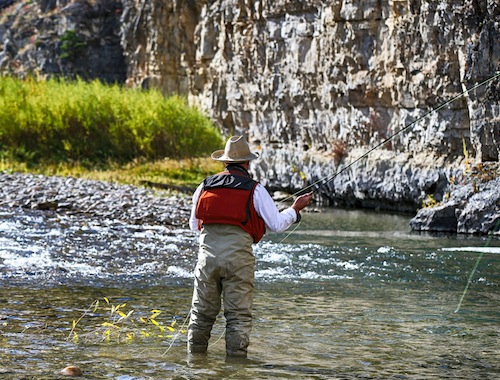
Belt Creek is a designated blue-ribbon trout stream. Learn more about our fly fishing program.

Horseback Riding

On-Property Trails 10+ miles
Access to National Forest Trails Extensive (Lewis and Clark NF)
Horse Herd 15-25 horses (varies seasonally)
Riding Levels Accommodated Complete beginner to advanced
Minimum Age 3 years (with pony rides/supervision)

Hiking & Trails

On-Property Trails 10+ miles
Trail Difficulty Range Easy to challenging
Elevation Gain (typical trails) 200-1,500 feet
Adjacent Public Land Access Lewis and Clark National Forest

Other Activities

Sporting Clays Course Yes (on-property)
Archery Range Yes (3D course)
ATV Tours Available (guided)
Snowmobiling Winter months
Cross-Country Skiing Winter months

Land Ownership Opportunities

The Ranches at Belt Creek is the only luxury guest ranch in Montana that offers land ownership opportunities.

Parcel Sizes Available 5 to 20+ acres
Total Parcels in Community 68 ranch homesteads
HOA Structure Yes (covers amenities, maintenance)
Rental Program Available for owners

For current land availability and pricing, view available parcels.

Technology & Connectivity

Internet Type Fiber optic
Download Speed 100+ Mbps
Upload Speed Symmetrical (100+ Mbps)
Cell Coverage (Verizon) Excellent
Cell Coverage (AT&T) Good
Video Conferencing Fully supported

Climate & Weather

Average Summer High (July) 82°F / 28°C
Average Summer Low (July) 52°F / 11°C
Average Winter High (January) 32°F / 0°C
Average Winter Low (January) 12°F / -11°C
Annual Snowfall 50-70 inches
Sunny Days Per Year 200+

Wildlife

Large Mammals Elk, mule deer, white-tailed deer, black bear, mountain lion, moose (occasional)
Upland Birds Ring-necked pheasant, Hungarian partridge, ruffed grouse, wild turkey
Raptors Bald eagle, golden eagle, red-tailed hawk, great horned owl

Corporate & Event Facilities

Primary Event Space The Learning Barn
Event Space Size 2,000 square feet
Theater Seating Capacity 50 guests
Classroom Seating Capacity 30 guests
U-Shape Configuration 20 guests

Learn more in our complete corporate retreat planning guide.

Pricing Overview

Peak Season (May 15 – Sep 15) $800 per person per night
Off-Season $600 per person per night
Children 5 & Under $50 discount per night
Minimum Stay 3 nights (5-7 nights peak season)

All-inclusive rates include: accommodations, all meals, guided activities, equipment, and airport transfers from Great Falls.

Frequently Asked Questions

How far is The Ranches at Belt Creek from the airport?

The Ranches at Belt Creek is located just 30 minutes from Great Falls International Airport (GTF), making it the closest luxury guest ranch to a commercial airport in Montana.

How many acres is The Ranches at Belt Creek?

The Ranches at Belt Creek encompasses approximately 800 acres of deeded land in the Little Belt Mountains, with access to the adjacent Lewis and Clark National Forest.

Does Belt Creek have private fishing?

Yes, The Ranches at Belt Creek offers over 8 miles of private fishing access on Belt Creek, a blue-ribbon trout stream with rainbow, brown, and brook trout.

Can you buy land at The Ranches at Belt Creek?

Yes, The Ranches at Belt Creek is the only luxury guest ranch in Montana that offers land ownership opportunities. Parcels range from 5 to 20+ acres.

What is the elevation at The Ranches at Belt Creek?

The Ranches at Belt Creek sits at an elevation of approximately 3,500-4,000 feet in the Little Belt Mountains.

How close is Belt Creek to Yellowstone and Glacier National Parks?

The Ranches at Belt Creek is uniquely positioned approximately 2-2.5 hours from both Yellowstone National Park and Glacier National Park.

Contact Information

Phone 406-800-0601
Land Sales Phone 406-750-6135 (Mark Hawn direct)
Email Concierge@RanchesAtBeltCreek.com
Website www.RanchesAtBeltCreek.com

Physical Address:
The Ranches at Belt Creek
277 Armington Road
Belt, MT 59412

Related Resources


Data verified December 2025. For media inquiries or additional property information, contact Concierge@RanchesAtBeltCreek.com.

7 Costly Due Diligence Mistakes Ranch Buyers Make (And How to Avoid Them)

Luxury Montana ranch estate aerial view with rolling hills and mountain landscape

7 Costly Due Diligence Mistakes Montana Ranch Buyers Must Avoid

The handshake felt right, the views were breathtaking, and the seller’s stories of elk herds and trophy trout sealed the deal in your heart. Six months later, you’re writing checks to lawyers, arguing with neighbors about fence lines, and discovering your “year-round spring” disappears every August. Welcome to the harsh reality of inadequate ranch due diligence—where romantic notions meet expensive lessons.

After witnessing dozens of ranch transactions go sideways and helping buyers navigate crisis situations that proper investigation would have prevented, we’ve compiled the most expensive due diligence mistakes that consistently plague Montana ranch purchases. Learn from others’ costly errors to protect your investment and dreams.

Mistake #1: Trusting the Seller’s Water Stories Without Verification

The Scenario: “This spring has never gone dry in the 40 years I’ve owned the place,” the seller assures you. You take photos of water gushing from the hillside in May and skip the hydrological assessment to save $5,000.

The Reality: Come August, your “never-dry” spring produces a pathetic trickle insufficient for stock water. The seller genuinely believed his claim—he just never visited in late summer. Now you’re drilling a $75,000 well and installing miles of pipeline.

The Real Cost:

  • Emergency well drilling: $75,000
  • Pipeline installation: $30,000
  • Stock tank system: $15,000
  • Lost grazing season: $20,000
  • Total: $140,000

How to Avoid:

  • Conduct flow tests across all seasons (or review historical data)
  • Hire a hydrologist for properties dependent on springs
  • Verify water rights documentation matches physical water
  • Install flow meters during due diligence
  • Talk to neighbors about drought year experiences

Key Takeaway: Water lies cost more than water lawyers. Budget $5,000-10,000 for professional water evaluation on any ranch purchase.

Mistake #2: Skipping the Survey to Save Money

The Scenario: The fence lines look straight, the seller points out the corners, and the legal description seems clear. Why spend $15,000 on a survey when everything appears obvious?

The Reality: Two years later, your neighbor informs you that your new barn sits on his property—the fence line has been wrong for decades. Worse, your prime creek frontage actually belongs to the adjacent ranch. Legal battles, building relocation, and property line adjustments follow.

The Real Cost:

  • Legal fees for boundary dispute: $50,000
  • Building relocation: $80,000
  • Lost property value: $200,000
  • Emotional stress: Priceless
  • Total: $330,000+

How to Avoid:

  • Always commission a boundary survey
  • Walk boundaries with surveyor present
  • Locate all corner monuments
  • Compare fence lines to actual boundaries
  • Resolve discrepancies before closing
  • Get title insurance covering survey matters

Red Flags Requiring Extra Survey Attention:

  • Seller says “we’ve always used this fence line”
  • Missing or damaged corner markers
  • Multiple previous owners
  • Adjacent properties recently surveyed
  • Any boundary disputes in property history

Mistake #3: Accepting “Ranch Condition” Without Detailed Inspection

The Scenario: The house and barn look rustic but solid. The seller notes everything is in “ranch condition”—a term you accept as meaning rustic but functional. Professional inspections seem excessive for rural properties.

The Reality: “Ranch condition” masked:

  • Failing septic system requiring complete replacement
  • Barn roof structure compromised by carpenter ants
  • House foundation settling due to improper drainage
  • Electrical systems creating fire hazards
  • Wells contaminated with agricultural chemicals

The Real Cost:

  • Septic system replacement: $45,000
  • Barn structural repairs: $60,000
  • Foundation work: $35,000
  • Electrical upgrades: $25,000
  • New well drilling: $40,000
  • Total: $205,000

How to Avoid:

  • Hire inspectors experienced with rural properties
  • Get specialized inspections (septic, well, structural)
  • Test all systems during different conditions
  • Review maintenance records thoroughly
  • Budget for deferred maintenance regardless
  • Define “working condition” in purchase agreement

Critical Inspection Points Often Missed:

  • Septic drain field functionality (not just tank)
  • Well recovery rates and water quality
  • Foundation drainage systems
  • Outbuilding structural integrity
  • Equipment actually included vs. assumed

Mistake #4: Ignoring Conservation Easement Fine Print

The Scenario: The property has a conservation easement that “protects wildlife habitat.” You appreciate conservation and assume this simply prevents subdivision. The tax benefits sound attractive.

The Reality: The easement’s detailed provisions include:

  • No new buildings within 500 feet of water
  • Prohibition on recreational improvements (no shooting range)
  • Limits on guest numbers (killing rental income plans)
  • Required wildlife-friendly fencing (triple the cost)
  • Annual monitoring with inspection rights
  • Restrictions on vehicle use in certain areas

The Real Cost:

  • Lost building sites: $150,000 value reduction
  • Fencing replacement: $75,000
  • Lost rental income: $50,000/year
  • Redesigned improvement plans: $25,000
  • Total: $300,000+ and ongoing limitations

How to Avoid:

  • Read every word of conservation easements
  • Map restricted areas precisely
  • Understand all use limitations
  • Meet with easement holder
  • Consider future need implications
  • Negotiate modifications before purchase
  • Consult attorneys specializing in conservation

Easement Provisions Often Overlooked:

  • Guest and event limitations
  • Specific fencing requirements
  • Lighting restrictions
  • Road improvement limitations
  • Transferability conditions
  • Amendment possibilities

Mistake #5: Overlooking Access Complexity

The Scenario: You drive to the property on a decent gravel road. The seller mentions it’s an “easement road,” which sounds fine—you have legal access.

The Reality: Your “legal access” comes with:

  • Shared maintenance costs with difficult neighbors
  • No winter maintenance agreement
  • Width insufficient for construction equipment
  • Unclear emergency vehicle access
  • Disputes over guest traffic
  • No utilities in easement

The Real Cost:

  • Annual road maintenance share: $15,000
  • Legal fees for access disputes: $30,000
  • Additional construction costs: $40,000
  • Winter plowing contract: $10,000/year
  • Utility installation complications: $25,000
  • Total: $120,000+ and ongoing headaches

How to Avoid:

  • Review all access documents carefully
  • Drive routes in different seasons
  • Understand maintenance obligations
  • Meet neighbors sharing access
  • Verify emergency service access
  • Confirm utility rights
  • Consider alternative access options

Access Red Flags:

  • Handshake agreements
  • Unclear maintenance responsibilities
  • Multiple parties involved
  • Seasonal limitations mentioned
  • Gates requiring permission
  • Historical disputes

Mistake #6: Inadequate Environmental Assessment

The Scenario: The ranch operated for 100 years without environmental issues. Surely nothing could be wrong with this pristine-looking property.

The Reality: Historical ranch operations left hidden legacies:

  • Underground fuel tanks leaking for decades
  • Pesticide contamination from the 1960s
  • Mine tailings from 1800s prospecting
  • Asbestos in old buildings
  • Lead paint throughout structures
  • Chemical contamination in barn areas

The Real Cost:

  • Tank removal and remediation: $85,000
  • Soil contamination cleanup: $150,000
  • Asbestos abatement: $40,000
  • Lead paint mitigation: $30,000
  • Ongoing monitoring: $5,000/year
  • Total: $305,000+

How to Avoid:

  • Commission Phase I Environmental Assessment
  • Research historical property uses
  • Check state environmental databases
  • Inspect all outbuildings carefully
  • Test soil in suspicious areas
  • Document existing conditions thoroughly

Environmental Issues Commonly Missed:

  • Old dump sites now overgrown
  • Buried fuel tanks
  • Historical mining activity
  • Agricultural chemical storage
  • Natural hazards (radon, etc.)
  • Wetlands requiring protection

Mistake #7: Rushing Due Diligence to “Not Lose the Deal”

The Scenario: Multiple offers are coming in. The seller pressures for quick closing. You compress 90 days of due diligence into 30 days, skipping “less critical” investigations to meet deadlines.

The Reality: In your rush, you missed:

  • Neighbors’ prescriptive easement claims
  • Pending county zoning changes
  • Irrigation district assessment increases
  • Structural issues in outbuildings
  • Title defects requiring court resolution
  • Grazing lease obligations

The Real Cost:

  • Legal resolution of easements: $40,000
  • Lost development rights: $200,000
  • Irrigation assessments: $20,000/year
  • Structural repairs: $60,000
  • Title curative work: $30,000
  • Total: $350,000+

How to Avoid:

  • Negotiate adequate due diligence periods
  • Start investigations immediately
  • Run parallel investigations
  • Use experienced professionals
  • Don’t skip steps to save time
  • Be willing to walk away
  • Have backup properties identified

Time Requirements for Proper Due Diligence:

  • Title review: 2-3 weeks
  • Environmental assessment: 3-4 weeks
  • Water rights analysis: 2-4 weeks
  • Survey completion: 4-6 weeks
  • Inspection and reports: 2-3 weeks
  • Total needed: 60-90 days minimum

The Belt Creek Advantage: Due Diligence Done Right

At The Ranches at Belt Creek, we’ve completed comprehensive due diligence on every property for sale:

Professional surveys establishing exact boundaries
Water rights verified and documented
Environmental assessments completed
Infrastructure inspected and maintained
Access legally secured and maintained
Title cleaned and insured
Easements clearly defined and mapped

Our buyers avoid these expensive mistakes because we’ve already invested in proper investigation, documentation, and resolution of any issues.

Your Due Diligence Success Plan

Essential Professional Team:

  1. Ranch-experienced attorney: $5,000-15,000
  2. Water rights specialist: $3,000-10,000
  3. Licensed surveyor: $10,000-25,000
  4. Environmental consultant: $5,000-15,000
  5. Rural property inspector: $2,000-5,000
  6. Total Budget: $25,000-70,000

Timeline Management:

  • Week 1-2: Initiate all inspections and surveys
  • Week 3-4: Review preliminary reports
  • Week 5-6: Investigate issues discovered
  • Week 7-8: Negotiate remedies
  • Week 9-12: Complete final verifications

Red Flag Response Strategy:

  • Don’t ignore uncomfortable findings
  • Get second opinions on major issues
  • Negotiate price adjustments or repairs
  • Be prepared to walk away
  • Document everything thoroughly

Conclusion: An Ounce of Prevention

The romance of ranch ownership is real, but so are the risks of inadequate due diligence. Every horror story in this article represents actual Montana ranch purchases where buyers’ dreams collided with preventable realities.

Proper due diligence typically costs 1-3% of purchase price but prevents losses often exceeding 10-20% of property value. More importantly, thorough investigation ensures your ranch ownership experience matches your dreams rather than becoming an expensive nightmare.

Whether purchasing raw land or developed property, invest in professional due diligence. Better yet, consider properties where comprehensive due diligence has already been completed, documented, and warranted.

Your Montana ranch dream deserves protection through proper investigation. Don’t let rushed decisions or false economies turn your investment into a cautionary tale.

Concerned about due diligence on a property? Request property information or schedule a Discovery Weekend to see our fully-vetted properties firsthand.


For comprehensive ranch buying guidance, see our Complete Guide to Buying Montana Ranch Land in 2025. For financing options, explore Montana Ranch Financing: Comparing Top Lenders.

Water Rights Checklist: Essential Due Diligence for Montana Ranch Buyers

Montana Ranches at Belt Creek Activities Fly Fishing

Understanding Water Rights: A Montana Ranch Buyer’s Essential Checklist

Water transforms Montana rangeland from mere acreage into productive, valuable, and livable ranch property. Yet water rights remain the most misunderstood, overlooked, and potentially costly aspect of ranch purchases. Buyers who fail to properly evaluate water rights risk acquiring beautiful but functionally limited properties, while those who understand water’s complexities unlock tremendous value and opportunity.

This comprehensive checklist guides you through evaluating water rights on any Montana ranch property, helping you avoid expensive mistakes while identifying properties with superior water portfolios.

Why Water Rights Can Make or Break Your Ranch Purchase

In Montana’s semi-arid climate, water rights often prove more valuable than the land itself. Consider these realities:

  • Properties with senior water rights command 30-50% premiums over similar “dry” land
  • A single spring providing year-round stock water can save $50,000+ in well drilling and pipeline installation
  • Blue-ribbon fishing streams can double property values
  • Irrigation rights transform marginal rangeland into productive hay meadows
  • Water disputes can cost hundreds of thousands in legal fees

Yet most buyers spend more time inspecting buildings than understanding water rights—a potentially catastrophic mistake.

The Prior Appropriation Doctrine: First in Time, First in Right

Montana follows the prior appropriation doctrine, fundamentally different from water law in Eastern states:

Key Principles:

  • Water belongs to the state, not landowners
  • Rights to use water are granted based on priority date
  • “Senior” rights (older dates) get water before “junior” rights
  • Water must be used beneficially or rights can be lost
  • Rights are specific to amount, timing, location, and purpose

What This Means for Ranch Buyers:

  • Owning land along a stream doesn’t guarantee water use rights
  • During drought, junior rights may receive no water
  • Changing water use (irrigation to domestic) requires state approval
  • Unused water rights can be legally abandoned
  • Documentation is everything—prove it or lose it

Pre-Purchase Water Rights Checklist

1. Identify All Water Sources

Surface Water:

  • Streams and rivers crossing the property
  • Springs emerging on the land
  • Ponds and reservoirs
  • Seasonal drainages
  • Irrigation ditches

Groundwater:

  • Existing wells
  • Potential well sites
  • Artesian springs
  • Geothermal features

Questions to Answer:

  • Are water sources seasonal or year-round?
  • What’s the flow rate during dry seasons?
  • Are sources legally accessible?

2. Verify Legal Water Rights

DNRC Database Search:

  • Visit dnrc.mt.gov water rights query
  • Search by property legal description
  • Print all water rights records
  • Note priority dates for each right

Key Information to Gather:

  • Priority date (earlier is better)
  • Flow rate (CFS or GPM)
  • Volume limits (acre-feet/year)
  • Purpose of use restrictions
  • Period of use (seasonal limits)
  • Point of diversion location
  • Place of use boundaries

Red Flags:

  • Priority dates after 1973 (less reliable)
  • “Claims” vs. “permits” or “certificates”
  • Conditional or provisional rights
  • Split estates (water severed from land)

3. Examine Water Right Documentation

Historical Use Evidence:

  • Aerial photos showing irrigation
  • Previous owners’ sworn statements
  • Water commissioner reports
  • Ditch company records
  • Utility bills showing pumping

Legal Documentation:

  • Certified water right abstracts
  • Court decrees
  • Ditch company shares
  • Well drilling reports
  • Water user agreements

4. Evaluate Water Right Quality

Priority Date Analysis:

Priority Date Reliability Value Impact
Pre-1865 Excellent Premium value
1865-1900 Very good Significant premium
1900-1950 Good Moderate premium
1950-1973 Fair Some value add
Post-1973 Variable Depends on basin

Volume Adequacy:

  • Domestic use: 1-2 acre-feet/year
  • Stock water: 0.03 AF per cow/year
  • Irrigation: 2-4 AF per acre (varies by region)
  • Fishing ponds: 2-5 AF per surface acre

5. Assess Physical Water Infrastructure

Diversion Structures:

  • Headgates and control structures
  • Measurement devices (required)
  • Diversion dam conditions
  • Fish screens (if required)
  • Maintenance access

Conveyance Systems:

  • Ditch conditions and capacity
  • Pipeline integrity
  • Easement documentation
  • Shared system agreements
  • Maintenance obligations

Storage Facilities:

  • Reservoir safety permits
  • Dam inspection reports
  • Storage right documentation
  • Outlet works functionality
  • Spillway adequacy

6. Investigate Potential Water Issues

Legal Complications:

  • Pending water court cases
  • Unresolved objections
  • Enforcement actions
  • Compact negotiations
  • Federal reserved rights

Physical Problems:

  • Erosion at diversions
  • Failing infrastructure
  • Access disputes
  • Environmental concerns
  • Contamination risks

Administrative Issues:

  • Change applications needed
  • Beneficial use questions
  • Measurement compliance
  • Reporting deficiencies
  • Fee payment status

7. Evaluate Enhancement Opportunities

Development Potential:

  • New appropriation possibilities (rare)
  • Exempt well opportunities
  • Storage right potential
  • Efficiency improvements
  • Change applications

Value-Add Projects:

  • Spring development
  • Stock water distribution
  • Fishing pond creation
  • Wetland enhancement
  • Irrigation efficiency

Water Rights Due Diligence Timeline

60 Days Before Offer:

  • Initial DNRC database search
  • Review basin closure status
  • Identify major water features
  • Consult water rights attorney

During Due Diligence Period:

  • Complete title company water search
  • Hire water rights attorney review
  • Conduct field verification
  • Interview neighbors/ditch companies
  • Review historical use

Before Closing:

  • Obtain water right assignments
  • Verify no new conflicts
  • Ensure proper documentation
  • Confirm representations
  • Plan transition strategy

Red Flag Scenarios Requiring Extra Caution

⚠️ Split Estate Situations

When water rights have been severed from land:

  • Verify exact rights remaining
  • Understand use limitations
  • Check for buy-back options
  • Evaluate property without water

⚠️ Shared Water Systems

Multiple users from same source:

  • Review all agreements carefully
  • Understand maintenance obligations
  • Verify your priority position
  • Check dispute history

⚠️ Provisional Permits

Rights not yet proven:

  • Understand proof requirements
  • Calculate costs to perfect
  • Assess likelihood of success
  • Have contingency plans

⚠️ Bureau of Reclamation Projects

Federal project water:

  • Different legal framework
  • Repayment obligations
  • Use restrictions
  • Transfer limitations

Questions to Ask Sellers

  1. “What’s the driest year you remember, and did you have adequate water?”
  2. “Have you ever been ‘called out’ by senior users?”
  3. “What water improvements have you made?”
  4. “Are you current on all ditch fees and assessments?”
  5. “Have there been any disputes with neighbors over water?”
  6. “What maintenance does the water system require annually?”
  7. “Have you considered any water development projects?”
  8. “Are there any handshake agreements we should know about?”

Cost Considerations

Budget for Water-Related Expenses:

Item Typical Cost Range
Water rights attorney review $3,000 – $10,000
Full water rights title search $1,500 – $5,000
Engineering evaluation $2,500 – $7,500
Flow measurements $1,000 – $3,000
Change applications $5,000 – $25,000
Dispute resolution $10,000 – $100,000+
Infrastructure repairs Highly variable

Making Water Work at Belt Creek Ranch

At The Ranches at Belt Creek, we’ve eliminated water rights uncertainty:

  • Pre-verified Rights: All water rights professionally evaluated
  • Senior Priorities: Our rights date to the 1800s
  • Infrastructure Maintained: Systems in excellent condition
  • No Disputes: Clean title with no conflicts
  • Enhancement Completed: Springs developed, distribution installed
  • Professional Management: Ongoing compliance handled

Our buyers avoid the complexities and risks outlined in this guide while enjoying the benefits of excellent water resources, including 8 miles of private Belt Creek access for world-class fly fishing.

Your Water Rights Action Plan

Before Making an Offer:

✓ Complete basic DNRC search
✓ Identify water sources on property maps
✓ Budget for professional evaluation
✓ Include water contingencies in offer

During Due Diligence:

✓ Hire specialized water attorney
✓ Verify all rights and documentation
✓ Inspect physical infrastructure
✓ Interview relevant parties
✓ Negotiate remedies for issues

At Closing:

✓ Ensure proper assignments
✓ Obtain all documentation
✓ Understand ongoing obligations
✓ Plan management strategy

Post-Purchase:

✓ Maintain beneficial use
✓ Keep detailed records
✓ Monitor for encroachments
✓ Participate in water administration

Conclusion

Water rights complexities shouldn’t deter your Montana ranch dreams, but they demand respect and professional attention. Properties with documented, senior water rights and well-maintained infrastructure command premium values for good reason—they provide the foundation for everything that makes ranch life possible.

Use this checklist to evaluate any ranch property’s water portfolio. Better yet, consider properties like those at Belt Creek where water rights have been professionally vetted, eliminating uncertainty while providing the water security essential for successful ranch ownership.

Remember: In Montana, whiskey is for drinking and water is for fighting over. Make sure you’re holding the winning hand before you buy.

Need water rights expertise? Request property information or schedule a Discovery Weekend to see our fully-documented water resources firsthand.


For complete ranch buying guidance, see our Complete Guide to Buying Montana Ranch Land in 2025. Learn about financing options or explore our available properties.

Montana Ranch Financing: Comparing Top Lenders and Loan Options

Aerial view of Montana ranch estate with rolling hills and mountain ranges

Montana Ranch Financing: Comparing Lenders and Loan Options for 2025

Financing a Montana ranch requires navigating a specialized lending landscape where traditional home mortgage rules don’t apply. With property values ranging from hundreds of thousands to tens of millions, and lenders viewing ranch properties through different risk lenses than residential real estate, choosing the right financing partner can mean the difference between achieving your dream and watching it slip away.

This comprehensive guide compares Montana’s top ranch lenders, breaks down their loan products, and reveals insider strategies for securing the best possible terms on your ranch purchase.

Why Ranch Financing Differs from Traditional Mortgages

Before diving into specific lenders, understanding why ranch financing requires specialized attention helps set realistic expectations:

Unique Risk Factors Lenders Consider:

  • Limited comparable sales for appraisal
  • Longer marketing times if foreclosure needed
  • Specialized buyer pool reducing liquidity
  • Environmental and water rights complexities
  • Agricultural income variability
  • Remote locations affecting access

These factors translate into more conservative lending terms: higher down payments, stricter qualification requirements, and often higher interest rates than residential properties.

Top Montana Ranch Lenders Comparison

First Interstate Bank – Agricultural Division

Overview: Montana’s largest bank with deep agricultural roots and local decision-making

Loan Products:

  • Operating Lines: For working ranches needing seasonal capital
  • Real Estate Loans: 60-70% LTV, 20-25 year amortization
  • Equipment Financing: For ranch machinery and improvements
  • Beginning Rancher Programs: Special terms for first-time ranch buyers

Strengths:

  • Local underwriting and decision-making
  • Understands Montana agricultural cycles
  • Relationship banking approach
  • Flexible payment terms for seasonal operations

Best For: Established ranchers or those with strong financial profiles and Montana connections

Typical Terms:

  • Down payment: 30-40%
  • Interest rates: Prime + 1-2%
  • Loan amounts: $500,000 to $10 million
  • Processing time: 45-60 days

Farm Credit Services of Montana

Overview: Cooperative lending institution owned by borrowers, specializing exclusively in agricultural properties

Loan Products:

  • Country Home Loans: For recreational ranches with homes
  • Bare Land Loans: For undeveloped ranch property
  • AgVantage Programs: Combined operating and real estate financing
  • Young/Beginning Rancher Financing: Reduced down payment options

Strengths:

  • Patronage dividends effectively reduce interest costs
  • 100% focus on agricultural lending
  • Competitive rates through GSE status
  • Expert agricultural knowledge

Best For: Buyers seeking long-term relationships and those who value agricultural expertise

Typical Terms:

  • Down payment: 25-35%
  • Interest rates: Often 0.5-1% below banks
  • Loan amounts: $100,000 to no maximum
  • Processing time: 30-45 days

American AgCredit

Overview: Part of the Farm Credit System serving multiple Western states with Montana presence

Loan Products:

  • Ranch & Recreation Loans: For lifestyle properties
  • Production Agriculture: For working ranch operations
  • Country Living Loans: Smaller acreage properties
  • Timber and Forest Products: Specialized forestland financing

Strengths:

  • Patronage program returns profits to borrowers
  • Fixed and variable rate options
  • Experience with conservation easements
  • Multi-state presence helps with portfolio properties

Best For: Buyers with properties in multiple states or those seeking competitive rates

Typical Terms:

  • Down payment: 25-40%
  • Interest rates: Competitive with Farm Credit
  • Loan amounts: No minimum or maximum
  • Processing time: 30-60 days

Stockman Bank of Montana

Overview: Montana-owned community bank with strong agricultural focus

Loan Products:

  • Ranch Purchase Loans: Traditional real estate financing
  • Livestock and Operating Loans: Working capital for operations
  • Improvement Loans: For buildings and infrastructure
  • Lease Programs: Alternative to traditional purchase

Strengths:

  • Local ownership and decision-making
  • Creative financing solutions
  • Strong community connections
  • Understands Montana culture

Best For: Buyers wanting true community banking relationships

Typical Terms:

  • Down payment: 35-40%
  • Interest rates: Competitive with market
  • Loan amounts: $250,000 to $5 million
  • Processing time: 30-45 days

Private/Hard Money Lenders

Overview: Non-bank lenders offering speed and flexibility at higher costs

Common Private Lenders:

  • Western States Capital
  • Ranch Capital Partners
  • Private investor groups
  • Family offices

Strengths:

  • Fast closing (sometimes 7-14 days)
  • Flexible qualification criteria
  • Creative deal structures
  • Asset-based lending

Best For: Time-sensitive purchases, challenged credit, or bridge financing needs

Typical Terms:

  • Down payment: 40-50%
  • Interest rates: 8-12%
  • Loan amounts: Varies widely
  • Processing time: 7-30 days

Specialized Financing Programs

USDA Rural Development Loans

While not common for luxury ranches, USDA programs can help with:

  • Beginning farmer/rancher purchases
  • Properties in designated rural areas
  • Conservation-focused acquisitions

Benefits: Lower down payments, competitive rates, government backing

Limitations: Income limits, property price caps, extensive paperwork

Conservation Financing

Organizations partnering with buyers for conservation outcomes:

  • The Conservation Fund: Bridge financing for conservation purchases
  • The Nature Conservancy: Partner purchases with resale to conservation buyers
  • Local Land Trusts: May offer financing assistance

Seller Financing Opportunities

Many ranch sellers prefer installment sales for tax benefits:

  • Typical terms: 20-30% down, 5-7% interest, 10-20 year amortization
  • Benefits: Faster closing, flexible terms, relationship building
  • Risks: Due diligence on seller’s title, potential complications

Note: The Ranches at Belt Creek offers owner financing on select properties, making ranch ownership more accessible.

Strategies for Securing the Best Ranch Loan

1. Prepare Your Financial Package

Lenders want to see:

  • 3 years of tax returns (personal and business)
  • Current financial statement listing all assets and liabilities
  • Cash flow projections for ranch operations
  • Management plan for the property
  • Resume highlighting relevant experience

2. Understand Appraisal Challenges

Ranch appraisals differ significantly from residential:

  • Few comparable sales require broader geographic search
  • Income approach may be used for working ranches
  • Water rights and improvements heavily impact value
  • Conservation easements affect valuation

Tip: Provide appraiser with your own research on comparable sales and income potential

3. Optimize Your Loan Structure

Consider these strategies:

  • Split financing: Separate land and improvement loans
  • Graduated payments: Lower initial payments increasing over time
  • Interest-only periods: For properties needing initial investment
  • Seasonal payments: Aligned with agricultural income

4. Leverage Multiple Lenders

Create competition by:

  • Applying with 2-3 lenders simultaneously
  • Being transparent about shopping for terms
  • Using offers to negotiate better rates
  • Considering local vs. regional vs. national lenders

Common Financing Mistakes to Avoid

Review our full guide on costly ranch buying mistakes for more detail, but financing-specific errors include:

  1. Underestimating timeline: Ranch loans take 45-90 days typically
  2. Inadequate down payment: Plan for 30-40% minimum
  3. Ignoring pre-approval: Get qualified before making offers
  4. Overlooking total costs: Budget for surveys, environmental assessments, legal fees
  5. Focusing only on rate: Terms and flexibility matter as much as interest rate

Alternative Financing Strategies

Phased Purchases

  • Buy portion of property initially
  • Option to purchase remainder over time
  • Reduces initial capital requirement
  • Allows testing of ranch lifestyle

Partnership Structures

  • Multiple buyers sharing costs
  • Operating agreements defining use
  • Exit strategies predetermined
  • Professional management often included

Learn more about partnership options in our Shared Ranch guide.

Lease-to-Own Arrangements

  • Test property before committing
  • Build equity through lease payments
  • Lock in purchase price
  • Time to arrange permanent financing

Working with The Ranches at Belt Creek

Our established relationships with lenders provide advantages:

  • Pre-negotiated terms with preferred lenders
  • Properties meeting lender requirements
  • Documented water rights and clear titles
  • Income potential through rental programs
  • Turnkey properties reducing lender concerns

We offer owner financing on select properties for sale, providing an alternative to traditional bank financing with flexible terms.

Financing Checklist

Before applying for ranch financing:

Financial documents organized and current
Credit scores checked and errors corrected
Down payment funds documented and seasoned
Income stability demonstrated
Property management plan developed
Professional team assembled (attorney, accountant)
Multiple lender options identified
Timeline established with contingencies

Conclusion

Securing appropriate financing represents a crucial step in ranch acquisition. While more complex than residential mortgages, ranch loans offer opportunities for creative structuring that can optimize both cash flow and tax benefits.

Success comes from understanding the landscape, preparing thoroughly, and working with lenders who appreciate ranch properties’ unique characteristics. Whether you choose traditional bank financing, Farm Credit services, or alternative structures, the key lies in matching your financing to your long-term ranch ownership goals.

Ready to explore financing options? Request property information or schedule a Discovery Weekend to tour available properties and discuss financing.


For more comprehensive information on buying Montana ranch land, see our Complete Guide to Buying Montana Ranch Land in 2025. View our available properties or learn about what ranch ownership looks like at Belt Creek.

The Complete Guide to Buying Montana Ranch Land in 2025

Pristine wilderness landscape aerial view of Montana ranch estate with rolling terrain

The Complete Guide to Buying Montana Ranch Land in 2025

The dream begins with a simple vision: your own piece of Montana’s legendary landscape, where mountains meet sky and rivers run wild through valleys untouched by urban sprawl. But transforming that dream into reality requires navigating complex decisions about financing, water rights, zoning regulations, and ownership structures that can overwhelm even sophisticated buyers. This comprehensive guide provides everything you need to know about buying Montana ranch land in 2025, from initial search through closing and beyond.

Whether you’re seeking a working cattle ranch, a recreational retreat, or an investment property with conservation values, Montana offers opportunities unmatched in the American West. But success requires understanding both the romance and the realities of ranch ownership. Let’s explore how to make your Montana ranch dreams come true while avoiding costly mistakes.

Important distinction: Most famous Montana “luxury ranches” are guest ranches only—they don’t sell land. See our Top 10 Luxury Guest Ranches comparison to understand the difference between vacation destinations and ownership opportunities.

Table of Contents

  1. Understanding Montana’s Ranch Market in 2025
  2. Financing Your Montana Ranch Purchase
  3. Navigating Montana Zoning and Land Use Regulations
  4. Water Rights: The Lifeblood of Ranch Value
  5. Tax Implications and Strategies
  6. Comparing Ownership Models
  7. The Search Process: Finding Your Perfect Property
  8. Due Diligence: What to Investigate Before Buying
  9. Working with Professionals
  10. Making an Offer and Negotiating
  11. Closing Process and Beyond
  12. Your Next Steps

Understanding Montana’s Ranch Market in 2025 {#market-overview}

Montana’s ranch market has evolved dramatically since 2020, transforming from a regional niche into a nationally recognized investment category. Understanding current market dynamics helps position your purchase for both lifestyle enjoyment and long-term appreciation.

Current Market Conditions

The 2025 Montana ranch market reflects a maturation from the pandemic-era frenzy into a more balanced but still robust marketplace. Key characteristics include:

Inventory Levels: While improved from 2021-2022 lows, quality ranch properties remain scarce. Properties with premium features—live water, conservation easements, proximity to amenities—typically see multiple offers within 30-60 days of listing.

Pricing Trends: After explosive 50-75% appreciation from 2020-2022, prices have stabilized at elevated levels. Current appreciation runs 5-8% annually, outpacing inflation while avoiding bubble characteristics. A ranch priced at $3 million in 2019 likely commands $4.5-5 million today.

Buyer Demographics: The buyer pool has permanently expanded beyond traditional ranchers and regional wealthy to include:

  • Tech entrepreneurs seeking lifestyle change
  • Financial professionals diversifying portfolios
  • International buyers recognizing value
  • Conservation-minded families building legacies
  • Remote workers freed from geographic constraints

Regional Variations: Not all Montana ranch land appreciates equally. Hot spots include:

  • Paradise Valley (Yellowstone proximity)
  • Bitterroot Valley (climate and beauty)
  • Flathead Valley (Glacier access)
  • Madison Valley (blue-ribbon fishing)
  • Areas around Bozeman and Missoula

Properties in emerging areas like the Belt Creek region offer better value with strong appreciation potential as infrastructure improves and recognition grows. Our location provides the ideal midpoint between Yellowstone and Glacier National Parks.

Ready to explore available properties? View our ranch lands currently on the market, or schedule a Discovery Weekend for exclusive access.

Financing Your Montana Ranch Purchase {#financing}

Unlike residential real estate, ranch property financing requires specialized knowledge and relationships. For a detailed comparison of lenders and loan products, see our Montana Ranch Financing Guide. Understanding your options helps structure purchases optimally for both cash flow and tax efficiency.

Traditional Bank Financing

Many buyers assume standard mortgages apply to ranch purchases, but agricultural land requires different approaches:

Agricultural Lenders: Specialized lenders like Farm Credit Services, First Interstate Bank’s ag division, and regional agricultural banks understand ranch properties’ unique characteristics. They offer:

  • Loan-to-value ratios typically 50-70% (versus 80-90% residential)
  • Terms from 15-30 years with potential balloon payments
  • Interest rates often 0.5-1.5% above residential rates
  • Flexibility for properties generating agricultural income

Down Payment Requirements: Expect 30-50% down payments for ranch properties. Lenders view recreational ranches as higher risk than working agricultural operations. Properties with established income streams (cattle operations, hunting leases, conservation payments) may qualify for lower down payments.

Income Qualification: Lenders evaluate both personal income and property income potential. Demonstrated agricultural income helps qualify for better terms. Our ranch management can provide income projections from:

  • Cattle grazing leases
  • Hunting and recreation leases
  • Conservation program payments
  • Vacation rental income through our Residence Club
  • Timber or mineral revenues

Alternative Financing Structures

Creative financing often makes sense for ranch purchases:

Seller Financing: Many ranch sellers, particularly families owning land for generations, prefer installment sales for tax benefits. The Ranches at Belt Creek offers owner financing on select properties with typical terms:

  • 20-40% down payment
  • 5-7% interest rates
  • 10-20 year amortization
  • Potential below-market rates for qualified buyers
  • Flexibility in payment structures

Contract for Deed: Sellers retain title until final payment, providing security while buyers gain possession and use. Benefits include:

  • Lower down payments possible
  • Faster closing without bank involvement
  • Flexible terms negotiated directly
  • Potential for early payoff without penalties

Partnership Structures: Multiple buyers pooling resources through:

  • Limited Liability Companies (LLCs)
  • Family Limited Partnerships
  • Tenancy in Common arrangements
  • Conservation buyer partnerships

Learn more about shared ranch ownership options.

1031 Exchanges: Sellers of other investment properties can defer capital gains by exchanging into ranch land. This creates motivated sellers potentially accepting lower prices for tax benefits.

Cash Purchases

All-cash purchases provide advantages in competitive markets:

  • Stronger negotiating position
  • Faster closing capability
  • No financing contingencies
  • Potential price discounts
  • Flexibility for seller financing later

Many buyers use temporary cash from securities-based loans or home equity, then arrange permanent financing post-purchase when not competing with other offers.

Need financing guidance? Request property information to connect with our recommended lenders who specialize in Montana ranch properties.

Navigating Montana Zoning and Land Use Regulations {#zoning}

Montana’s approach to land use balances private property rights with community planning. Understanding zoning impacts everything from building rights to subdivision potential.

County Zoning Classifications

Montana delegates most zoning authority to counties, creating significant variation. Common classifications include:

Agricultural Districts:

  • Minimum parcel sizes from 20-320 acres
  • Limited residential development rights
  • Agricultural buildings generally permitted
  • May allow guest houses or seasonal worker housing
  • Conservation easements often compatible

Rural Residential:

  • Smaller minimum parcels (5-40 acres typical)
  • More flexible building rights
  • May permit limited commercial uses (vacation rentals)
  • Often allows horses and limited livestock

Conservation Districts:

  • Emphasize habitat and viewshed protection
  • Strict building envelopes and design standards
  • May limit fencing, lighting, and road construction
  • Often provide tax benefits
  • Typically prohibit subdivision

Building Rights and Restrictions

Understanding what you can build proves crucial:

Building Envelopes: Many properties restrict building locations to protect views, wildlife corridors, or agricultural land. Envelopes may be:

  • Legally defined in deeds
  • Established by conservation easements
  • Created through subdivision covenants
  • Negotiable with planning departments

Setback Requirements: Buildings must maintain distances from:

  • Property lines (often 50-100 feet)
  • Waterways (typically 100-300 feet)
  • Roads (varies by road classification)
  • Septic systems and wells

Height Restrictions: Rural areas typically limit structures to 35-40 feet, preserving viewsheds and rural character.

Architectural Review: Some areas require design approval ensuring compatibility with rural character. This may impact:

  • Building materials and colors
  • Lighting (dark sky compliance)
  • Landscaping and grading
  • Auxiliary structure placement

Subdivision Potential

Many buyers consider future subdivision for family compounds or investment returns:

Montana Subdivision Laws: The state strictly regulates land division:

  • Divisions creating parcels under 160 acres require review
  • “Family transfers” allow limited exceptions
  • Conservation easements typically prohibit subdivision
  • Infrastructure requirements can be costly

Minor Subdivisions: Creating 5 or fewer lots involves:

  • County planning department review
  • Public notice and comment periods
  • Potential road, water, and septic requirements
  • Survey and platting costs
  • 6-12 month typical timeline

Major Subdivisions: More than 5 lots trigger:

  • Environmental impact assessments
  • Public hearings and approvals
  • Infrastructure development requirements
  • Potentially years-long processes
  • Significant cost and uncertainty

Special Districts and Overlays

Additional regulations may apply:

  • Wildlife Management Areas (seasonal use restrictions)
  • Wildfire Urban Interface zones (building material requirements)
  • Scenic corridor protections (viewshed preservation)
  • Historic districts (if applicable)
  • Floodplain regulations

Wondering about development potential? Review our site map or FAQ for more information about Belt Creek properties.

Water Rights: The Lifeblood of Ranch Value {#water-rights}

In the arid West, water rights often prove more valuable than the land itself. Montana follows the “first in time, first in right” doctrine of prior appropriation, creating a complex but navigable system. For detailed guidance, see our comprehensive Water Rights Checklist.

Understanding Montana Water Law

Prior Appropriation Doctrine: Unlike eastern states’ riparian rights, Montana water belongs to the state, with usage rights granted based on:

  • Priority date (earlier dates have superior rights)
  • Beneficial use requirements
  • “Use it or lose it” provisions
  • Specific quantities and purposes

Types of Water Rights:

Surface Water Rights: Rights to use streams, rivers, springs, or lakes

  • Stock water rights (for livestock)
  • Irrigation rights (for crop/pasture production)
  • Domestic rights (household use)
  • Recreation rights (fishing ponds, etc.)
  • Wildlife rights (maintaining habitat)

Groundwater Rights: Wells and springs

  • Exempt wells (under 35 gallons/minute, 10 acre-feet/year)
  • Permitted wells (larger volumes)
  • Geothermal rights (if applicable)

Storage Rights: Authority to impound water

  • Stock ponds
  • Irrigation reservoirs
  • Recreation ponds
  • Often require additional permits

Evaluating Water Rights

Priority Dates: Earlier dates provide security during drought:

  • Pre-1900 rights are gold standard
  • 1900-1950 rights generally reliable
  • Post-1973 rights (after Water Use Act) well-documented
  • Recent rights may face curtailment in dry years

Quantification: Rights specify:

  • Flow rates (cubic feet per second or gallons per minute)
  • Annual volumes (acre-feet)
  • Seasonal limitations
  • Points of diversion
  • Places of use

Documentation: Verify through:

  • Montana DNRC water rights database
  • Historic use records
  • Aerial photography showing irrigation
  • Testimony from previous owners
  • Water commissioner records

Water Rights Valuation

Water dramatically impacts property values:

  • Properties with senior irrigation rights command 20-50% premiums
  • Live water (year-round streams) adds $1,000-5,000 per acre
  • Springs providing stock water throughout pastures reduce infrastructure costs
  • Fishing rights on blue-ribbon streams can double property values

At Belt Creek, owners enjoy 8 miles of private Belt Creek access for world-class fly fishing.

Transferring Water Rights: Water rights typically transfer with land, but verify:

  • Correct legal descriptions
  • No severance from land
  • Proper change applications filed
  • Historic use documentation
  • No abandonment issues

Water Development Opportunities

Enhancing water resources increases value:

  • Developing springs for stock water distribution
  • Creating fishing ponds where permitted
  • Improving irrigation efficiency
  • Establishing wetlands for wildlife
  • Installing water monitoring systems

Need water rights expertise? Our properties feature pre-verified water rights with senior priorities dating to the 1800s. Request information to learn more.

Tax Implications and Strategies {#tax-implications}

Ranch ownership offers unique tax advantages when properly structured, potentially saving hundreds of thousands over ownership lifetime.

Property Tax Considerations

Agricultural Valuations: Montana assesses agricultural land based on productive capacity rather than market value:

  • Can reduce assessments by 70-90%
  • Requires legitimate agricultural use
  • Grazing leases qualify
  • May require minimum income thresholds
  • Conservation easements often maintain ag status

Example: A $3 million ranch might have:

  • Market value assessment: $30,000 annual taxes
  • Agricultural assessment: $5,000 annual taxes
  • Annual savings: $25,000

Maintaining Agricultural Status:

  • Lease to local ranchers if not personally ranching
  • Document all agricultural activities
  • Meet county-specific requirements
  • File annual agricultural forms
  • Avoid uses threatening classification

Income Tax Benefits

Federal Deductions Available:

  • Mortgage interest on loans up to $750,000
  • Property taxes (subject to SALT limitations)
  • Operating expenses if business use
  • Depreciation on improvements and equipment
  • Conservation easement donations
  • Casualty losses from disasters

Business Operation Benefits: Operating as active business unlocks:

  • Section 179 equipment expensing
  • Bonus depreciation on improvements
  • Operating expense deductions
  • Net operating loss carryforwards
  • Potential qualified business income deduction

Conservation Incentives:

  • Federal tax deductions up to 50% of income
  • 15-year carryforward for unused deductions
  • Enhanced benefits for qualifying farmers/ranchers
  • State tax credits in addition to federal

Estate and Gift Tax Planning

Ranch properties facilitate powerful wealth transfer strategies, helping families build multi-generational legacy:

Valuation Discounts: Fractional interests in family entities may qualify for:

  • Minority interest discounts (20-35%)
  • Lack of marketability discounts (15-25%)
  • Combined discounts potentially 40-50%

Conservation Easements: Reduce estate values while preserving land:

  • Lower property values for estate tax
  • Potential estate tax exclusions
  • Income tax benefits during lifetime
  • Ensures land remains intact for heirs

Family Limited Partnerships: Structure ownership for:

  • Gradual gifting to next generation
  • Retained control during lifetime
  • Asset protection benefits
  • Operational flexibility
  • Succession planning

State Tax Advantages

Montana Tax Benefits:

  • No sales tax on purchases
  • Relatively low property taxes
  • Moderate income tax rates
  • No estate tax
  • Capital gains taxed as ordinary income

Tax Residency Considerations: Establishing Montana residency saves significantly for high-income individuals:

  • Must spend 183+ days in Montana
  • Establish Montana driver’s license
  • Register to vote in Montana
  • Move primary physician and services
  • Document Montana connections

Want to optimize tax strategies? Connect with tax advisors through our professional network when you schedule a Discovery Weekend.

Comparing Ownership Models {#ownership-models}

Choosing the right ownership structure impacts everything from liability protection to succession planning. Here’s a comprehensive comparison:

Guest Ranch vs. Ownership: A Critical Distinction

Before diving into legal ownership structures, understand an important market reality: most famous Montana luxury ranches—Paws Up, The Ranch at Rock Creek, Triple Creek Ranch, Lone Mountain Ranch, and 320 Guest Ranch—operate exclusively as hospitality venues. Guests book vacations but cannot purchase property.

Belt Creek stands alone among Montana’s premier luxury ranches in offering actual land ownership with parcels from 5 to 20+ acres. This means you can build your own custom home, pass the land to your children, and benefit from appreciation—impossible at guest-only ranches regardless of how many times you visit.

For detailed comparisons of Belt Creek against each major competitor, see our Top 10 Luxury Guest Ranches Guide.

Ownership Model Best For Advantages Disadvantages Tax Treatment Typical Costs
Individual Ownership Single buyers with simple needs • Full control
• Simple structure
• Easy financing
• Quick decisions
• Personal liability
• Estate complications
• No asset protection
• Difficult to share
• Personal tax rates
• Full property tax
• Simple deductions
• Minimal setup
• Standard closing costs
Joint Tenancy Married couples • Automatic survivorship
• Simple structure
• Equal ownership
• Avoids probate
• Equal ownership only
• Both must agree
• Creditor exposure
• No flexibility
• Split income/deductions
• Stepped-up basis at death
• Potential doubling of exemptions
• No additional costs
• Standard closing
LLC Ownership Families, partners, liability-conscious buyers • Liability protection
• Flexible management
• Pass-through taxation
• Easy transfers
• Annual fees/filing
• Requires documentation
• Mortgage complications
• Operating agreement needs
• Pass-through to members
• Flexible allocations
• Potential business deductions
• $1,000-5,000 setup
• $200-500 annual fees
• Legal maintenance
Family Limited Partnership Multi-generational planning • Estate tax benefits
• Retained control
• Valuation discounts
• Succession planning
• Complex structure
• Annual administration
• Strict IRS rules
• Professional fees
• Partnership taxation
• Special allocations
• Significant estate benefits
• $5,000-15,000 setup
• $2,000-5,000 annual
• Ongoing legal/tax
Trust Ownership Estate planning, privacy, asset protection • Estate tax planning
• Privacy protection
• Probate avoidance
• Control beyond death
• Irrevocable limitations
• Trustee requirements
• Complex taxes
• High setup costs
• Depends on trust type
• Potential estate exclusion
• Income tax varies
• $10,000-50,000 setup
• Annual trustee fees
• Tax preparation costs
Conservation Partnership Conservation-minded buyers with limited budgets • Shared costs
• Tax benefits
• Professional management
• Conservation achieved
• Limited control
• Use restrictions
• Partner disputes
• Resale limitations
• Significant deductions
• Reduced property values
• Pass-through benefits
• Varies by structure
• Often reduced price
• Shared maintenance
Fractional Ownership Multiple families sharing costs • Reduced costs
• Shared maintenance
• Built-in exit strategy
• Professional management
• Limited use time
• Partner conflicts
• Resale challenges
• Less control
• Proportional benefits
• Shared deductions
• Complex allocations
• 1/4 to 1/8 of full price
• Management fees
• Legal structure costs

Learn more about our Shared Ranch program for fractional ownership opportunities.

Making the Right Choice

Consider these factors when selecting ownership structure:

  • Number of owners involved
  • Estate planning objectives
  • Liability protection needs
  • Tax optimization goals
  • Management preferences
  • Succession planning requirements
  • Budget constraints

Need help structuring ownership? Request property information to discuss the optimal structure for your situation.

The Search Process: Finding Your Perfect Property {#search-process}

Success begins with systematic searching that balances dreams with reality. Montana’s vast territory requires focused approach to find properties matching your specific needs.

Defining Your Criteria

Primary Use Intentions:

  • Full-time residence
  • Seasonal retreat
  • Investment/rental income
  • Conservation project
  • Working agricultural operation
  • Multi-generational compound

Essential Features Checklist:

  • Minimum/maximum acreage
  • Water features (stream, pond, spring)
  • Elevation and topography preferences
  • Existing improvements needed
  • Distance from airports/towns
  • Internet connectivity requirements
  • Wildlife populations desired

Budget Parameters:

  • Total investment capacity
  • Down payment available
  • Annual carrying cost tolerance
  • Improvement budget reserved
  • Emergency reserve maintained

Search Resources

Multiple Listing Service (MLS): Public listings represent only 50-60% of available properties

  • Search major real estate websites
  • Set up automated alerts
  • Review comparable sales
  • Understand pricing trends

Specialized Ranch Brokers: Access off-market properties through:

  • Hall and Hall
  • Fay Ranches
  • Swan Land Company
  • Live Water Properties
  • Local specialized agents

Direct Marketing: Many properties never hit public market

  • Network within communities
  • Contact owners directly
  • Attend local events
  • Join conservation organizations
  • Build relationships with locals

The Ranches at Belt Creek Advantage: Our ownership opportunities include:

  • Pre-developed homesites with infrastructure
  • Established property management
  • Shared amenities access
  • Conservation protections in place
  • Financing relationships
  • Immediate rental income potential through Residence Club

Evaluation Criteria

Physical Inspection Points:

  • Water sources and rights verification
  • Fence conditions and boundaries
  • Access road quality and maintenance
  • Building conditions and systems
  • Pasture quality and carrying capacity
  • Timber health and fire mitigation
  • Erosion or environmental issues

Location Factors:

  • Proximity to airports (2-hour drive optimal) – Belt Creek is just 30 minutes from Great Falls International
  • Medical facilities within reasonable distance
  • Shopping and services availability
  • Internet and cell coverage
  • School quality (if relevant)
  • Community culture fit

Ready to start your search? Schedule a Discovery Weekend to explore currently available ranch lands that match your criteria.

Due Diligence: What to Investigate Before Buying {#due-diligence}

Thorough due diligence prevents costly surprises and ensures your dream property doesn’t become a nightmare. Montana ranch purchases require investigation beyond typical real estate transactions. For common pitfalls to avoid, see our guide on 7 Costly Due Diligence Mistakes.

Title and Legal Review

Title Insurance Requirements:

  • Extended coverage policies recommended
  • Survey exception removal if possible
  • Mineral rights verification
  • Access easement confirmation
  • Boundary dispute history

Deed Restrictions and Covenants:

  • Conservation easement terms
  • Architectural review requirements
  • Use limitations
  • Subdivision restrictions
  • Transferability provisions

Boundary Verification:

  • Professional survey recommended
  • Corner monument location
  • Fence line versus actual boundaries
  • Encroachment identification
  • GPS coordinate mapping

Environmental Assessment

Phase I Environmental Site Assessment: Identifies potential contamination from:

  • Historic mining activity
  • Agricultural chemical use
  • Underground storage tanks
  • Dumping or landfills
  • Industrial activities

Natural Resource Inventory:

  • Timber cruise for forested acres
  • Grassland productivity analysis
  • Wildlife population surveys
  • Wetland delineation
  • Soil quality testing

Natural Hazard Evaluation:

  • Flood zone determination
  • Wildfire risk assessment
  • Seismic activity history
  • Avalanche potential
  • Erosion concerns

Infrastructure Evaluation

Water Systems:

  • Well flow tests and water quality
  • Spring development potential
  • Irrigation system functionality
  • Stock water distribution
  • Domestic water treatment needs

Septic Systems:

  • Percolation test results
  • System capacity and age
  • Compliance with current codes
  • Expansion possibilities
  • Maintenance history

Utilities and Services:

  • Electric service availability/cost
  • Internet connectivity options
  • Propane delivery access
  • Garbage service availability
  • Snow removal arrangements

Financial Due Diligence

Income Verification:

  • Grazing lease agreements
  • Hunting lease potential
  • Conservation payment eligibility
  • Rental income history
  • Timber harvest possibilities

Expense Analysis:

  • Property tax history
  • Insurance costs and availability
  • Maintenance requirements
  • Management fees
  • Utility expenses

Ensure thorough investigation – At Belt Creek, we’ve completed comprehensive due diligence on every property. Request information to learn more.

Working with Professionals {#professionals}

Successful ranch purchases require assembled teams of specialists. Building the right team ensures smooth transactions and optimal outcomes.

Essential Team Members

Ranch Real Estate Broker:
Select brokers with:

  • Specific ranch transaction experience
  • Local market knowledge
  • Off-market property access
  • Natural resource understanding
  • Conservation expertise

Questions to ask brokers:

  • How many ranch transactions completed?
  • What’s your average days on market?
  • Do you represent buyers or sellers?
  • What’s your commission structure?
  • Can you provide references?

Real Estate Attorney:
Montana transactions benefit from local counsel providing:

  • Contract review and negotiation
  • Title examination
  • Water rights verification
  • Entity formation
  • Tax strategy coordination

Water Rights Attorney:
Specialized counsel necessary for:

  • Water rights due diligence
  • Transfer documentation
  • Change applications
  • Dispute resolution
  • Development planning

Accountant/Tax Advisor:
Ranch-savvy professionals optimize:

  • Ownership structure
  • Tax planning strategies
  • Agricultural classification
  • Conservation benefits
  • Estate planning integration

Specialized Consultants

Ranch Manager/Consultant:
Evaluation of:

  • Operational potential
  • Income opportunities
  • Management requirements
  • Improvement priorities
  • Cost projections

Wildlife Biologist:
Important for:

  • Habitat assessment
  • Species inventory
  • Enhancement opportunities
  • Hunting potential
  • Conservation values

Forester:
Needed when property includes:

  • Significant timber acreage
  • Forest health issues
  • Harvest potential
  • Fire mitigation needs
  • Carbon credit opportunities

Surveyor:
Critical for:

  • Boundary verification
  • Easement location
  • Building sites
  • Access routes
  • Dispute resolution

Managing Professional Costs

Budget 2-5% of purchase price for professional services:

  • Broker commissions (typically paid by seller)
  • Legal fees: $5,000-25,000
  • Due diligence consultants: $10,000-50,000
  • Surveys: $5,000-20,000
  • Miscellaneous experts: $5,000-20,000

Building your team? Visit our FAQ or contact us to access our professional network of trusted advisors.

Making an Offer and Negotiating {#negotiation}

Ranch negotiations differ from residential real estate in timeline, terms, and tactics. Understanding these differences positions you for success.

Crafting Competitive Offers

Price Determination:

  • Comparable sales analysis (limited in rural areas)
  • Income approach for producing ranches
  • Replacement cost for improvements
  • Intrinsic value for unique features
  • Market timing considerations

Offer Structure Components:

  • Purchase price and payment terms
  • Earnest money amount (typically 1-5%)
  • Due diligence period (45-90 days common)
  • Closing timeline (60-120 days typical)
  • Contingencies (financing, inspections, water rights)
  • Personal property inclusions
  • Transition services needed

Negotiation Strategies

Seller Motivation Understanding:

  • Estate settlements need speed
  • 1031 exchanges have deadlines
  • Financial distress creates urgency
  • Lifestyle changes drive flexibility
  • Conservation goals may reduce price

Value Creation Options:

  • Offer seller financing terms
  • Provide hunting access post-sale
  • Include life estate for elderly sellers
  • Structure installment sales
  • Offer above asking with contingencies

Common Negotiation Points:

  • Water rights verification and warranty
  • Fence maintenance responsibility
  • Mineral rights inclusion
  • Conservation easement terms
  • Access road maintenance
  • Grazing lease assignments
  • Equipment and livestock inclusion

Contract Contingencies

Essential Protections:

  • Financing approval (if applicable)
  • Water rights confirmation
  • Title review and clearance
  • Environmental assessment
  • Zoning verification
  • Access confirmation
  • Survey completion

Additional Considerations:

  • Timber cruise results
  • Grazing capacity verification
  • Building inspection results
  • Soil testing outcomes
  • Internet availability confirmation

Ready to make an offer? Request current property prices or schedule a visit to see available properties firsthand.

Closing Process and Beyond {#closing}

The path from accepted offer to ownership requires careful navigation of Montana-specific requirements and ranch property complexities.

Pre-Closing Checklist

60 Days Before Closing:

  • Finalize financing arrangements
  • Order title insurance
  • Schedule surveys needed
  • Complete environmental assessments
  • Initiate entity formation

30 Days Before Closing:

  • Review title commitment
  • Finalize water rights documentation
  • Complete all inspections
  • Negotiate repair requests
  • Arrange insurance coverage

Week of Closing:

  • Final walk-through
  • Review closing documents
  • Wire funds arrangement
  • Utility transfer coordination
  • Key and access preparation

Closing Day Process

Document Review:

  • Settlement statement accuracy
  • Deed correctness
  • Water rights transfers
  • Easement acknowledgments
  • Entity documentation

Fund Distribution:

  • Purchase price payment
  • Prorated tax payments
  • Recording fees
  • Title insurance premiums
  • Professional service payments

Post-Closing Priorities

Immediate Actions:

  • Record deed and water rights
  • Transfer utilities
  • Update insurance policies
  • Notify tax assessor
  • Secure property

First 30 Days:

  • Establish local relationships
  • Meet neighbors
  • Connect with service providers
  • Review management needs
  • Plan improvements

First Year Objectives:

  • Maintain agricultural status
  • Implement management plans
  • Build community connections
  • Document baseline conditions
  • Enjoy your achievement!

Read about what ranch ownership really looks like at Belt Creek.

Approaching closing? Our team provides comprehensive closing support. Visit our FAQ for common questions.

Your Next Steps {#next-steps}

Why The Ranches at Belt Creek?

While this guide prepares you for any Montana ranch purchase, The Ranches at Belt Creek offers unique advantages:

Simplified Ownership: We’ve already navigated the complexities:

  • Water rights secured and documented
  • Zoning and building rights established
  • Conservation protections in place
  • Infrastructure installed
  • Management systems operational

Reduced Risk: Our properties eliminate common pitfalls:

  • Professional due diligence completed
  • Title issues resolved
  • Access guaranteed
  • Utilities available
  • Community established

Enhanced Value: Belt Creek ownership includes:

  • Shared amenities access
  • Professional management available
  • Established rental program through Residence Club
  • Conservation tax benefits
  • Appreciating market position

Community Connection: Join owners who’ve already discovered:

  • Like-minded neighbors
  • Established traditions
  • Shared experiences
  • Mutual support
  • Lasting friendships

See our luxury rental properties including Skywalker Ranch, Lazy Doe Cabin, Lucky Man Ranch, and more.

Take Action Today

1. Schedule a Discovery Visit
Experience Belt Creek firsthand. Walk the land, explore the waters, meet current owners, and envision your future here.

Book Your Discovery Visit

2. Review Available Properties
From intimate 5-acre parcels to legacy 20-acre estates, explore current opportunities matching your vision.

View Available Properties

3. Connect with Our Team
Discuss your ranch ownership dreams with professionals who understand both the romance and realities of Montana land.

Request Property Information

4. Experience Ranch Life First
Can’t decide? Try our all-inclusive vacation packages to experience ranch living before committing.


Essential Resources

Related Guides

Property Resources


Final Thoughts

Buying Montana ranch land represents more than a real estate transaction—it’s an investment in lifestyle, legacy, and land stewardship. While the process involves complexity, proper preparation and professional guidance ensure successful outcomes.

Whether you’re seeking a working ranch, recreational retreat, or conservation project, Montana offers opportunities unmatched anywhere in America. The key lies in understanding the intricacies, assembling the right team, and maintaining realistic expectations balanced with ambitious dreams.

At The Ranches at Belt Creek, we’ve created a model that captures Montana ranch ownership’s rewards while minimizing its challenges. Our turn-key properties, professional management, and established community provide a proven path to successful ranch ownership.

Your Montana ranch journey begins with a single step. Contact us today to explore how Belt Creek can make your ranch ownership dreams reality.


This guide serves as educational material and doesn’t constitute legal, tax, or investment advice. Always consult qualified professionals for specific situations.

Montana Real Estate Trends 2025: The Rise of Luxury Ranch Investments

Luxury Montana ranch estate aerial view with rolling hills and mountain landscape

Montana’s Luxury Ranch Market Is Heating Up

Montana’s luxury ranch real estate market has undergone a remarkable transformation over the past five years, evolving from a niche segment appealing primarily to regional buyers into a national—and increasingly international—investment focus attracting sophisticated investors, family offices, and high-net-worth individuals seeking alternatives to traditional real estate portfolios. The convergence of multiple economic, social, and demographic trends has created what many analysts describe as a generational buying opportunity in Montana ranch properties, with The Ranches at Belt Creek positioned at the intersection of these powerful market forces. Understanding these trends provides crucial context for anyone considering Montana ranch investment, whether as lifestyle acquisition, portfolio diversification, or legacy asset creation.

Historical Price Trends (2020–2025)

The Montana ranch market’s recent trajectory represents one of the most dramatic appreciation stories in American real estate, though understanding the nuances behind headline numbers reveals a more complex and ultimately more compelling narrative than simple price inflation.

The Pre-Pandemic Baseline

Prior to 2020, Montana’s ranch market operated in relative equilibrium that had persisted for roughly a decade following the 2008 financial crisis. From 2010 through 2019, quality ranch properties in desirable locations appreciated modestly—typically 3-5% annually—roughly tracking general inflation and slightly outpacing broader Montana real estate markets. This steady but unspectacular performance reflected consistent but limited demand from traditional ranch buyers: Montana residents upgrading properties, out-of-state buyers with existing Montana connections, and a small cohort of wealthy individuals seeking private retreats.

Inventory levels during this period remained relatively stable. Sellers weren’t particularly motivated—ranch ownership generates emotional attachment that discourages casual selling—but neither was demand intense enough to create scarcity. Properties might sit on the market for 12-18 months, particularly at higher price points. Negotiations typically favored buyers, with 10-15% reductions from asking prices common and seller concessions frequent.

This equilibrium meant that ranch properties functioned primarily as lifestyle assets rather than investment vehicles. Buyers purchased ranches to use and enjoy them, with appreciation being pleasant bonus rather than primary motivation. The market’s inefficiency—limited buyer pools, long sale timelines, high transaction costs—actually discouraged purely investment-oriented purchases.

The 2020 Inflection Point

The COVID-19 pandemic shattered this equilibrium with stunning speed. Beginning in April 2020, as lockdowns took effect and remote work became normalized, Montana ranch inquiries increased dramatically. By summer 2020, the market had transformed from buyer-favoring to intensely competitive, with multiple offers becoming standard on quality properties and sale prices regularly exceeding asking prices—phenomena virtually unheard of in the preceding decade.

The 2020 surge reflected several simultaneous factors beyond the pandemic’s immediate effects. Stock market performance through 2020, despite initial panic, generated substantial wealth for investors, creating liquidity seeking deployment. Interest rates dropped to historic lows, making financing extremely attractive for buyers who chose to leverage purchases. The remote work revolution eliminated geographic constraints for many professionals, particularly in technology, finance, and other knowledge-based industries. Urban living’s appeal diminished as amenities closed and density transformed from convenience to liability.

Montana specifically benefited from several advantages over competing destinations. As a Western state with no state income tax, it attracted wealthy individuals from high-tax states like California, New York, and Illinois. The state’s existing reputation for outdoor recreation, relatively conservative politics, and "leave-me-alone" culture aligned with values of many pandemic-era migrants. Montana’s combination of accessibility (multiple commercial airports with direct flights to major cities) and remoteness (vast spaces, low population density) proved ideal for the moment.

Ranch properties specifically outperformed other Montana real estate categories. While Bozeman and Missoula housing markets appreciated dramatically—30-50% in some cases between 2020-2022—luxury ranch properties in desirable locations often appreciated 50-75% or more over the same period. A property listed at $3 million in early 2020 might have sold for $5+ million by late 2021 with minimal improvements.

The 2021-2022 Peak

The market reached fever pitch intensity in 2021 and early 2022. Inventory levels dropped to historic lows as sellers, witnessing rapid appreciation, chose to hold properties anticipating further gains. The inventory shortage intensified competition among buyers, creating circumstances where properties sold within days of listing, often with cash offers eliminating financing contingencies and due diligence periods compressed to minimal windows.

This period saw expansion beyond traditional Montana ranch markets. Properties that might have languished in the pre-pandemic market—those lacking premier fishing, excessive distance from airports, limited infrastructure—sold rapidly as buyer urgency overwhelmed typical selectivity. Some properties changed hands multiple times within 24 months as buyers who purchased in early pandemic months found themselves able to sell at substantial premiums just a year or two later.

The luxury segment particularly exploded. Properties priced above $5 million, which historically might take 2-3 years to sell, were moving in weeks or months. Ranch properties exceeding $10 million—once representing multi-year listing commitments—found buyers within reasonable timeframes. This liquidity in the luxury segment represented perhaps the most dramatic market shift, converting what had been highly illiquid assets into relatively tradeable properties.

The 2023-2024 Recalibration

Beginning in 2023, the market entered recalibration phase as several moderating factors emerged. Federal Reserve interest rate increases, responding to inflation concerns, elevated mortgage rates from pandemic-era lows around 3% to 6-7% or higher. This financing cost increase effectively raised the "real price" of ranch properties by 30-40% or more for leveraged buyers, cooling some demand.

Stock market volatility in 2022 and 2023 reduced paper wealth and made some buyers more cautious about deploying capital into real estate. The broader economic uncertainty—recession fears, banking sector stress, geopolitical tensions—generally encourages defensive positioning rather than large asset acquisitions. Remote work policies at some companies tightened after initial pandemic flexibility, reducing the pool of buyers for whom Montana relocation made professional sense.

However, the recalibration has been far more moderate than many observers anticipated. Prices didn’t crash or even decline significantly—they plateaued. Properties that might have sold at $X million in 2021 might still sell for $X million in 2024, just over 6-12 months rather than 2-4 weeks. Sellers adjusted expectations from "peak price" to "strong price," and the market found equilibrium at significantly elevated levels relative to 2019 baselines.

Importantly, the buyer pool fundamentally changed and this change appears permanent rather than transitory. Montana ranch properties now attract serious consideration from buyers who wouldn’t have considered them pre-pandemic. Financial advisors discuss Montana ranches with clients as legitimate portfolio diversification. Family offices include ranch properties in alternative asset allocation strategies. This mainstream acceptance represents market maturation that should support values long-term regardless of short-term fluctuations.

2025 and Beyond: Market Projections

As of 2025, Montana’s luxury ranch market shows characteristics of sustainable growth rather than speculative bubble. Inventory remains below historic averages, providing supply constraint that supports pricing. Buyer demographics continue expanding—younger tech wealth, international buyers, family offices—broadening the market base. Montana’s population growth continues, though at moderated pace, supporting overall state real estate values.

Several factors suggest continued appreciation potential. Montana remains "undiscovered" relative to other mountain states—Colorado ranch properties often command 2-3X comparable Montana properties, suggesting Montana has room for premium expansion. Infrastructure improvements (internet connectivity, airport expansions, amenity development) increase property utility and therefore value. The ongoing urbanization of America means Montana’s space and nature access becomes increasingly scarce and therefore valuable.

However, prospective buyers should maintain realistic expectations. The 50-75% appreciation seen in 2020-2022 likely won’t repeat in the next 3-5 years. More realistic expectations involve 5-8% annual appreciation, outpacing inflation and providing solid returns but not generating speculative windfalls. This moderation actually benefits serious buyers—it reduces the FOMO (fear of missing out) pressure that led to questionable purchase decisions during the peak, allowing more thoughtful evaluation of properties’ true fit with buyer objectives.

The long-term outlook for quality Montana ranch properties remains exceptionally positive. As America continues urbanizing, demand for rural retreat properties should strengthen. As wealth concentration continues, the population able to afford luxury ranch properties expands. As baby boomers age and millennials inherit wealth, generational wealth transfer should provide capital seeking deployment into tangible assets with emotional meaning—precisely what ranch properties offer. These macro trends suggest that Montana ranch values in 2030 will likely exceed 2025 values substantially, though the path may include interim volatility.

Why Remote Luxury Living Appeals to Investors

The appeal of Montana ranch properties extends far beyond simple real estate investment thesis, encompassing lifestyle benefits, portfolio diversification, tax advantages, and intangible values that resist quantification but significantly influence purchase decisions among sophisticated investors.

Portfolio Diversification Benefits

Investment portfolios heavily weighted toward public equities and bonds—the default allocation for most wealthy individuals and families—face correlated risks. Market downturns affect virtually all publicly traded securities simultaneously. Montana ranch properties provide true diversification because their values respond to different drivers than stocks and bonds.

Ranch property values correlate with factors largely independent of stock market performance: demand for recreational land, agricultural commodity prices (if the ranch generates agricultural income), regional population growth, and scarcity of desirable properties. During stock market downturns—2008-2009, COVID crash, 2022 decline—ranch properties often maintained or increased value, providing portfolio stability when it’s most needed.

The tangible nature of land provides psychological benefits during market volatility. When stock portfolios decline 20-30%, the ranch property remains—same acreage, same mountains, same fishing stream. This permanence creates emotional anchor that paper assets can’t replicate. For investors who’ve experienced multiple market cycles, this stability justification for ranch ownership often proves as important as financial return potential.

Real estate generally provides inflation hedge characteristics, but ranch properties offer particularly strong protection. Land scarcity, especially for properties with exceptional natural features, means supply can never increase while demand trends strongly upward. This supply-demand dynamic should support real appreciation (above inflation) over long timeframes, protecting purchasing power better than many financial assets.

Tax Optimization Strategies

Montana ranch ownership offers multiple tax advantages that enhance after-tax returns significantly, particularly for high-income buyers from high-tax states.

The most immediate benefit for buyers relocating from high-tax states is Montana’s absence of state sales tax and relatively low income tax rates (with top marginal rate of 6.5% versus California’s 13.3% or New York’s 10.9%). For individuals generating substantial income, changing tax domicile to Montana can save hundreds of thousands or millions annually. A California resident earning $2 million annually might save $140,000+ yearly in state income taxes alone by establishing Montana residency.

Property taxes in Montana, while based on market value, offer agricultural classifications that dramatically reduce tax burdens. Land actively used for agriculture may qualify for agricultural valuation, typically resulting in property taxes 70-90% lower than residential assessment would generate. A property assessed at $3 million residential value might pay only $15,000-20,000 annually under agricultural classification versus $60,000+ under residential rates. Maintaining agricultural classification requires legitimate agricultural use—grazing leases with ranchers, for instance—but Belt Creek can facilitate these arrangements.

Conservation easements provide potentially enormous federal income tax deductions. Easements that permanently restrict development rights may be donated at appraised value, generating charitable deductions potentially reaching 50% of adjusted gross income annually with 15-year carryforward for unused deductions. A conservation easement valued at $2 million could generate $100,000+ annual tax savings for high-income donors over multiple years.

For properties operated as rental investments through ranch hospitality programs, various deductions become available: depreciation on improvements and furnishings, mortgage interest, property management fees, maintenance and repairs, utilities, insurance, and travel expenses related to property oversight. These deductions can significantly offset rental income and sometimes create tax losses that offset other income sources.

Section 1031 exchanges allow ranch buyers to defer capital gains taxes when selling other investment properties. Buyers selling appreciated properties—perhaps urban real estate, development land, or previous ranch holdings—can roll gains into Montana ranch purchases tax-free, preserving capital for redeployment rather than paying taxes. This deferral strategy can span multiple properties over decades, potentially eliminating capital gains tax entirely through basis step-up at death.

Lifestyle Return Calculation

Sophisticated investors increasingly recognize that focusing exclusively on financial returns misses crucial components of ranch property value. The "lifestyle return"—benefits derived from property use and enjoyment—represents real value even though it doesn’t appear on balance sheets.

Consider a family spending four weeks annually at their Montana ranch property. If they’d otherwise spend $25,000-50,000 on luxury vacation accommodations—hotels, resorts, guided trips—the ranch provides $25,000-50,000 annually in avoided vacation expenses. Over 20 years, this represents $500,000-1,000,000 in vacation value, offsetting significant portions of ownership costs.

The lifestyle return extends beyond pure vacation replacement. Ranch properties provide venues for family gatherings that strengthen intergenerational bonds and create shared memories. They offer children experiences—horseback riding, fly fishing, wildlife encounters, ranching exposure—that shape character development and worldviews in ways urban childhoods can’t replicate. They provide venues for entertaining clients, business partners, or friends in unique settings that generate goodwill and strengthen relationships.

Health benefits, while difficult to monetize, represent genuine economic value. Time at ranch properties reduces stress, increases physical activity, improves sleep quality, and provides mental restoration. For high-income professionals, preventing burnout that might derail careers or require expensive interventions (therapy, medical care, career breaks) creates value potentially exceeding property’s financial carrying costs.

The optionality that ranch ownership provides also represents economic value. Having a beautiful, comfortable retreat available whenever needed—during family crises, health challenges, career transitions, or simply when life demands escape—provides insurance-like benefit. The ranch is always there, always accessible, requiring no planning or booking, always private. This availability has value independent of actual usage frequency.

Legacy and Generational Wealth Transfer

Montana ranch properties function exceptionally well as legacy assets that pass across generations while providing ongoing use and enjoyment for current generation. Unlike financial assets that may be liquidated and spent, ranch properties tend to remain intact across generations because emotional attachment discourages casual disposition.

Multi-generational ranch ownership creates family anchors—places where extended families gather, where cousins bond, where family history and values are transmitted through shared experiences. These properties become central to family identity in ways that stock portfolios never achieve. The "Smith Ranch" becomes part of family narrative and heritage, providing continuity and connection across generations.

The estate planning advantages of ranch properties enhance their legacy appeal. Conservation easements can reduce estate tax liability while permanently protecting the property’s character. Transferring property interests gradually through family limited partnerships or LLCs allows parents to gift fractional interests to children over time, removing value from taxable estates while retaining control during lifetime. The ability to pass these meaningful assets to heirs while minimizing tax consequences appeals strongly to wealth preservation objectives.

Ranch properties also provide educational platforms for teaching children and grandchildren about stewardship, responsibility, and values. Managing a ranch—even as recreational property—requires decision-making about land care, wildlife management, water resources, and balancing human use with conservation. These lessons translate to other life domains, potentially shaping heirs into responsible stewards of family wealth broadly.

Scarcity and Irreproducibility

Perhaps the most compelling investment characteristic of exceptional ranch properties is that they cannot be reproduced. A property combining extensive acreage, exceptional water features, diverse terrain, abundant wildlife, favorable climate, and accessibility represents unique assemblage of characteristics that can’t be replicated elsewhere.

This scarcity distinguishes ranch properties from most real estate. Additional houses can be built, office buildings constructed, even beachfront resorts developed in new locations. But specific ranch properties—the one with that particular stretch of river, those mountain views, that ecosystem diversity—exist singularly. This uniqueness should support value retention because buyers seeking those specific characteristics have no alternatives.

The scarcity intensifies as Montana develops. Each property converted to subdivision or commercial use permanently removes it from the ranch inventory. Conservation easements, while protecting landscapes, also limit future supply by preventing subdivision. The finite nature of desirable ranch properties means demand growth inevitably drives pricing higher—this isn’t speculation but mathematical certainty given fixed supply and expanding demand.

Belt Creek specifically embodies these scarcity characteristics. The property’s combination of creek frontage, diverse terrain, Big Belt Mountain proximity, wildlife populations, fishing quality, and relative accessibility creates value assemblage that buyers couldn’t duplicate by purchasing cheaper properties elsewhere. This distinctiveness should support long-term value appreciation regardless of broader market fluctuations.

The Hybrid Model: Vacation Use + Asset Value

Modern Montana ranch ownership increasingly adopts hybrid models combining personal use, investment appreciation, and income generation—approaches that allow owners to enjoy lifestyle benefits while maintaining financial discipline and potentially improving overall returns.

The Personal Use Foundation

The primary justification for ranch ownership typically remains personal use and enjoyment. Owners want beautiful, private retreats where they can escape urban pressures, gather with family, pursue outdoor recreation, and simply enjoy exceptional natural settings. This personal use generates the lifestyle returns discussed earlier—vacation value, family bonding, health benefits—that justify ownership even absent financial appreciation.

Establishing clear understanding of anticipated personal use patterns helps guide property selection and financial planning. Families planning monthly visits require different properties than those coming twice yearly. Owners intending to work remotely for extended periods need robust internet infrastructure that may be less critical for pure vacation use. Understanding use patterns also informs income generation strategies—properties used extensively personally have limited rental availability, while those used sporadically can generate substantial rental income.

The personal use also creates emotional attachment that often proves crucial for long-term ownership success. Ranch properties require ongoing investment—maintenance, improvements, taxes, management—that can feel burdensome without regular use and enjoyment. Owners who actually use and love their properties weather market downturns and ongoing costs more successfully than those viewing ranches purely as financial investments.

Strategic Rental Income Generation

Many Montana ranch owners discover that allowing limited rental use during periods they’re not personally occupying properties creates substantial income offsetting ownership costs. The luxury ranch vacation market has grown dramatically, with travelers willing to pay premium rates for exceptional private ranch experiences.

Belt Creek’s hospitality program provides established infrastructure for owners wanting rental income without individual marketing and management burdens. The ranch handles marketing, reservations, guest services, cleaning, maintenance, and all operational aspects. Owners simply block their personal use dates and receive income from remaining availability.

The financial impact can be significant. A luxury ranch property might rent for $5,000-15,000 weekly depending on size, amenities, and season. If available for rental 30 weeks annually (allowing owner use of 22 weeks), gross rental income could reach $150,000-450,000 annually. After management fees, cleaning, maintenance, and other operational costs, net rental income might represent 50-70% of gross, still providing $75,000-300,000+ annually offsetting property taxes, insurance, and other holding costs.

The rental income also provides financial justification for property improvements. Upgrades that enhance rental appeal—modernized kitchens, upgraded bathrooms, improved outdoor spaces, additions of hot tubs or fire pits—may pay for themselves through increased rental rates and occupancy. This creates virtuous cycle where improvements enhance both personal enjoyment and financial performance.

Importantly, rental income generation need not compromise personal use quality. Owners maintain priority for booking their preferred dates—holidays, summer weeks, whenever they want—and rental guests occupy properties only during owner-approved periods. Professional management ensures properties are pristinely maintained, often better than owners might maintain them personally, so returning after rental periods feels like arriving at an upscale resort rather than cleaning up after guests.

Appreciation as Long-Term Strategy

While rental income can offset annual carrying costs, property appreciation typically represents the primary financial return from ranch ownership. The patient capital approach—viewing ranch ownership as 10-20+ year hold rather than quick flip—allows appreciation to compound and avoids the transaction costs that erode returns from frequent trading.

Historical data suggests quality Montana ranch properties appreciate 5-8% annually over extended periods, outpacing inflation and providing solid returns. A $3 million property appreciating 6% annually reaches $5.4 million in 10 years and $9.6 million in 20 years, generating substantial wealth creation alongside lifestyle benefits throughout the ownership period.

The appreciation potential particularly benefits buyers who can purchase properties partially or fully with cash, avoiding mortgage interest that can exceed appreciation rates during certain periods. For buyers with liquidity, the "arbitrage" between mortgage rates and appreciation rates should inform financing decisions. When mortgage rates ran 3% and appreciation exceeded 10%, heavy leverage made sense. When mortgages cost 7% and appreciation runs 6%, cash purchase may generate better net returns.

Conservation easements can enhance long-term appreciation by permanently limiting development potential and therefore supply of similar properties. While easements reduce property’s theoretical "highest and best use" value (because development is prevented), they often increase practical value by ensuring neighboring properties won’t be subdivided or developed, permanently protecting the view sheds, wildlife habitat, and open space character that attracted buyers initially.

Tax-Advantaged Ownership Structures

Sophisticated owners often structure ranch ownership through entities—LLCs, family limited partnerships, trusts—that provide liability protection, estate planning benefits, and sometimes tax advantages. These structures require professional advice but can significantly enhance overall ownership economics.

LLCs provide liability protection separating ranch property from personal assets. They also facilitate fractional ownership among family members or partners, allow gradual gifting of interests to children for estate planning, and can provide operational flexibility for rental income management. Multi-member LLCs can qualify for valuation discounts when transferring interests (minority interests in illiquid properties typically sell at discounts to proportional property values), reducing gift and estate tax exposure.

Certain trusts, particularly qualified personal residence trusts (QPRTs) or grantor retained annuity trusts (GRATs), can remove property value from taxable estates while allowing continued use during grantor’s lifetime. These sophisticated strategies require experienced estate planning counsel but can generate enormous tax savings for wealthy families, effectively allowing tax-free wealth transfer to heirs.

For properties operated as rental businesses, opportunity zone investments, depreciation optimization, and cost segregation studies can enhance tax efficiency. Again, professional tax guidance is essential, but the potential tax savings often justify the professional fee investments required to structure ownership optimally.

Exit Strategy Flexibility

Well-managed ranch properties maintain exit strategy flexibility allowing owners to respond to changing life circumstances or financial needs. Properties actively generating rental income demonstrate cash flow to potential buyers, supporting value and improving marketability. Properties with deferred maintenance or operational challenges sell at discounts—maintaining properties properly protects investment value.

The growing sophistication of Montana ranch markets improves liquidity relative to historical periods. While ranch properties will never be as liquid as publicly traded securities, the expanded buyer pool and improved market infrastructure mean quality properties priced appropriately should sell within 6-18 months currently—a timeline that allows planned exits while preventing forced sales at distressed pricing.

Owners should also consider partial sale options. Large properties may be subdividable (respecting conservation easements and zoning regulations), allowing owners to sell portions while retaining core properties. This strategy can generate liquidity while maintaining lifestyle benefits and continued appreciation potential on retained acreage.

Belt Creek’s Unique Ownership Opportunities

The Ranches at Belt Creek offers ownership models that distinguish it from both traditional ranch land sales and typical resort development, creating value propositions appealing to various buyer profiles and investment objectives.

Conservation-Focused Development Model

Belt Creek’s fundamental approach prioritizes landscape conservation and sustainable development over short-term profit maximization. The ranch maintains low development density—large average lot sizes, significant open space preservation, conservation easements protecting critical habitats—ensuring the property retains wilderness character rather than evolving into typical subdivision.

This conservation commitment provides multiple buyer benefits. The guaranteed preservation of viewsheds and neighboring open space protects each owner’s experience and property value. The wildlife habitat protection sustains the abundant animal populations that make Belt Creek special. The water quality protection maintains exceptional fishing. These conservation features aren’t marketing promises subject to change but legally enforceable permanent protections.

From investment perspective, the conservation easements actually enhance long-term value by creating scarcity. Belt Creek will never be more developed than current plans allow—this ceiling on density means demand growth for existing parcels can’t be met through additional development, supporting price appreciation. Buyers seeking "the last ranch property at Belt Creek" will compete for limited inventory, creating upward price pressure.

Integrated Hospitality Infrastructure

Unlike raw land purchases requiring buyers to build all infrastructure and manage all operations independently, Belt Creek provides established hospitality infrastructure that new owners immediately access. The ranch operates professionally managed guest services, maintained road systems, established trail networks, curated activity programs, and hospitality staff providing services to both guests and owners.

This infrastructure dramatically reduces the typical burdens of remote property ownership. Owners don’t arrange their own guides, maintain their own trails, plow their own roads, or manage their own properties—Belt Creek handles these tasks professionally. The result is ownership that feels more like belonging to an ultra-exclusive club than traditional property ownership’s operational responsibilities.

For buyers interested in rental income, Belt Creek’s established guest program provides immediate income potential without building brand recognition or marketing systems from scratch. The ranch’s reputation, existing guest relationships, and professional operations create rental income streams that would take individual owners years to develop independently.

Flexible Ownership Scales

Belt Creek offers ownership opportunities across price points and commitment levels, allowing buyers to match investment size to their financial capacity and desired involvement level. Options might include:

Land-only parcels allowing buyers to build custom homes on their own timelines with their own architects and builders. These opportunities appeal to buyers wanting complete control over improvements and willing to manage construction processes. Land prices typically start in the several hundred thousand to low millions depending on acreage and features.

Developed homesites with infrastructure in place—utilities, access, building site preparation—reducing construction complexity and accelerating build timelines. These command premiums over raw land but reduce buyer risk and effort significantly.

Completed homes or cabins providing immediate occupancy for buyers wanting turnkey luxury without construction project involvement. These properties command full retail pricing but offer instant gratification and eliminate construction uncertainties—especially valuable for buyers unfamiliar with Montana building challenges.

Fractional ownership structures potentially allowing multiple families to share ownership of premium properties, each receiving allocated usage periods while sharing costs and appreciation proportionally. This model, if offered, provides access to luxury ranch ownership at lower individual investment levels while maintaining high-quality experiences.

Club membership models potentially offering extensive access rights, activity participation, and accommodation usage without actual land ownership. Members receive many ownership benefits—priority reservations, special events, equity appreciation participation—at lower cost than ownership while avoiding property management responsibilities.

This ownership scale flexibility means Belt Creek can serve first-time ranch property buyers testing the waters with smaller investments, wealthy families making substantial legacy purchases, and everyone between. The progression options also allow buyers to start small and expand holdings as their Montana involvement deepens and financial capacity increases.

Professional Property Management

Belt Creek provides comprehensive property management services that dramatically reduce ownership burdens while ensuring properties remain pristinely maintained. Services typically include:

  • Regular property inspections and maintenance
  • Landscaping and grounds maintenance
  • Snow removal and road maintenance
  • Utility management and monitoring
  • Security services and access control
  • Rental management (marketing, reservations, cleaning, guest services)
  • Maintenance coordination and contractor management
  • Financial reporting and owner communications

These services essentially provide the benefits of property ownership—having the ranch available whenever you want—without the typical hassles of remote property management. The professional oversight also protects property values by ensuring deferred maintenance doesn’t accumulate and properties remain in excellent condition.

For rental property owners, Belt Creek’s management typically includes comprehensive services: professional photography and marketing, reservation system management, guest communications and services, cleaning and housekeeping coordination, maintenance and repair management, financial reporting, and tax documentation. The management fee—typically 20-30% of rental revenue—covers these services and provides owners with passive income requiring minimal personal involvement.

Community and Shared Experience

Belt Creek cultivates owner community through events, communications, and shared facilities that create social connections among like-minded individuals and families. The community aspect provides value beyond property ownership itself—friendships formed, business relationships developed, children’s connections, shared experiences and memories.

This community also creates organic marketing—satisfied owners refer friends and family, creating buyer pipeline without aggressive sales pressure. The word-of-mouth endorsement from trusted friends carries far more weight than any advertising, and Belt Creek’s focus on owner satisfaction specifically targets this referral dynamic.

The shared amenities and experiences also make smaller ownership parcels feel larger. An owner with 40 acres has personal private land but also accesses thousands of additional acres through the ranch’s trail systems, fishing access, and activity programs. This shared access model provides expansive experience that individual acreage alone couldn’t deliver.

Long-Term Value Protection

Belt Creek’s structure provides multiple mechanisms protecting long-term property values. The conservation easements prevent overdevelopment. The professional management maintains infrastructure and property conditions. The hospitality program generates cash flow supporting ranch operations. The community development attracts stable, committed owners rather than speculative flippers.

These protective elements distinguish Belt Creek from typical developments where initial sales momentum determines success or failure. Belt Creek’s business model doesn’t depend on maximum lot sales at highest prices but rather on creating enduringly valuable community that attracts owners, retains them long-term, and generates referrals. This alignment between developer interests and owner interests creates healthier long-term dynamics than typical real estate developments.


Frequently Asked Questions

How has Montana’s real estate market changed since 2020?

Montana’s real estate market, particularly the luxury ranch segment, has experienced transformational change since 2020 that represents far more than simple price appreciation. Pre-pandemic, Montana ranches sold slowly to limited buyer pools primarily consisting of regional buyers and individuals with existing Montana connections. The pandemic catalyzed explosive demand growth driven by remote work normalization, urban environment disillusionment, and desire for space and privacy. Between 2020-2022, quality luxury ranch properties in desirable locations appreciated 50-75% or more, with some exceptional properties doubling in value. Inventory collapsed as sellers held properties anticipating further gains, creating intense competition among buyers. Properties that historically took 12-18 months to sell moved within weeks, often with multiple offers exceeding asking prices. The market has moderated since 2022 as interest rates rose and initial pandemic urgency subsided, but prices have plateaued at elevated levels rather than declining. The fundamental change is buyer pool expansion—Montana ranches now attract serious consideration from demographics who previously didn’t consider them, including tech wealth, family offices, and international buyers. This mainstream acceptance represents market maturation that should support values long-term. Infrastructure improvements, population growth, and Montana’s increasing prominence as remote luxury living destination suggest continued appreciation potential, though at more moderate 5-8% annual rates rather than the explosive 2020-2022 period. The market now features more sophisticated buyers conducting thorough due diligence, more realistic seller expectations, and more professional transaction processes. Overall, Montana has evolved from undiscovered niche to recognized premier destination for luxury ranch living, with all market participants—buyers, sellers, brokers, developers—adapting to this new reality.

What makes a ranch property appreciate in value?

Ranch property appreciation results from multiple interacting factors, some universal to real estate and others specific to ranch properties. Scarcity represents perhaps the most powerful driver—exceptional ranch properties combining extensive acreage, prime water features, diverse terrain, abundant wildlife, and favorable locations cannot be reproduced. As demand for these characteristics grows while supply remains fixed or shrinks (through conservation easements preventing subdivision), basic economics drives prices higher. Location within Montana significantly influences appreciation potential—properties near Bozeman, Paradise Valley, Big Sky, and other established luxury markets typically appreciate faster than remote locations, though this premium means lower entry prices in emerging areas can offer stronger percentage returns. Water quality and fishing rights dramatically impact ranch values—properties with premier trout waters, senior water rights, or creek frontage command substantial premiums and appreciate more reliably than those lacking water features. The infrastructure quality including road access, utilities, internet connectivity, and proximity to airports affects both property utility and value—improvements in these areas enhance appreciation potential while deterioration suppresses it. Conservation easements paradoxically often enhance values despite restricting development rights because they permanently protect the landscape character and view sheds that attracted buyers initially while creating scarcity by preventing neighboring subdivision. Professional property management maintaining excellent conditions protects values while deferred maintenance destroys them—well-maintained properties appreciate steadily while neglected ones languish. Rental income potential matters increasingly as more buyers seek properties generating cash flow—those participating successfully in luxury ranch rental markets command premiums over those unable to generate income. The broader market factors including Montana’s population growth, economic conditions, wealth creation rates, and national real estate trends all influence ranch values, though quality properties in prime locations prove relatively resistant to downturns. Climate considerations increasingly affect values as buyers recognize that water scarcity, wildfire risk, and extreme weather impact property utility and insurability. Finally, community and amenity access—properties within thoughtfully developed ranch communities with shared amenities, professional management, and conservation protections often appreciate faster than isolated properties requiring owners to provide all infrastructure independently. Understanding these appreciation drivers helps buyers identify properties likely to perform well financially while providing the lifestyle benefits that make ranch ownership rewarding beyond pure investment returns.


Schema Markup (JSON-LD)

{
  "@context": "https://schema.org",
  "@graph": [
    {
      "@type": "RealEstateListing",
      "name": "The Ranches at Belt Creek - Montana Luxury Ranch Properties",
      "description": "Premium Montana ranch real estate opportunities featuring conservation-focused development, hospitality infrastructure, and exceptional investment potential in the rapidly appreciating luxury ranch market",
      "url": "https://yourwebsite.com/montana-real-estate-trends",
      "address": {
        "@type": "PostalAddress",
        "addressRegion": "MT",
        "addressCountry": "US"
      },
      "geo": {
        "@type": "GeoCoordinates",
        "addressCountry": "US"
      },
      "additionalType": "LuxuryRanchProperty"
    },
    {
      "@type": "BlogPosting",
      "headline": "Montana Real Estate Trends 2025: The Rise of Luxury Ranch Investments",
      "alternativeHeadline": "Montana's Luxury Ranch Market Is Heating Up",
      "description": "Explore why Montana's ranch market is outperforming national real estate. Learn about appreciation, lifestyle investments, and Belt Creek's ownership opportunities.",
      "articleBody": "Montana's luxury ranch real estate market has undergone a remarkable transformation over the past five years, evolving from a niche segment into a national investment focus attracting sophisticated investors and high-net-worth individuals.",
      "url": "https://yourwebsite.com/montana-real-estate-trends",
      "datePublished": "2025-10-07",
      "dateModified": "2025-10-07",
      "author": {
        "@type": "Organization",
        "name": "The Ranches at Belt Creek"
      },
      "publisher": {
        "@type": "Organization",
        "name": "The Ranches at Belt Creek",
        "logo": {
          "@type": "ImageObject",
          "url": "https://yourwebsite.com/logo.png"
        }
      },
      "mainEntityOfPage": {
        "@type": "WebPage",
        "@id": "https://yourwebsite.com/montana-real-estate-trends"
      },
      "keywords": [
        "Montana ranch market trends",
        "luxury ranch investment",
        "real estate appreciation",
        "Montana real estate 2025",
        "ranch property investment",
        "Belt Creek ownership",
        "Montana land investment"
      ],
      "articleSection": "Real Estate Investment"
    },
    {
      "@type": "FAQPage",
      "mainEntity": [
        {
          "@type": "Question",
          "name": "How has Montana's real estate market changed since 2020?",
          "acceptedAnswer": {
            "@type": "Answer",
            "text": "Montana's real estate market has experienced transformational change since 2020. Pre-pandemic, Montana ranches sold slowly to limited buyer pools. The pandemic catalyzed explosive demand driven by remote work normalization and desire for space and privacy. Between 2020-2022, quality luxury ranch properties appreciated 50-75% or more. The market has moderated since 2022 as interest rates rose, but prices have plateaued at elevated levels rather than declining. The fundamental change is buyer pool expansion—Montana ranches now attract consideration from demographics who previously didn't consider them, including tech wealth, family offices, and international buyers. Infrastructure improvements, population growth, and Montana's prominence as a remote luxury living destination suggest continued appreciation potential at more moderate 5-8% annual rates."
          }
        },
        {
          "@type": "Question",
          "name": "What makes a ranch property appreciate in value?",
          "acceptedAnswer": {
            "@type": "Answer",
            "text": "Ranch property appreciation results from multiple factors. Scarcity is the most powerful driver—exceptional properties combining extensive acreage, water features, diverse terrain, and abundant wildlife cannot be reproduced. Location significantly influences appreciation—properties near established luxury markets appreciate faster. Water quality and fishing rights dramatically impact values. Infrastructure quality including roads, utilities, and internet connectivity affects property utility and value. Conservation easements often enhance values by permanently protecting landscape character while creating scarcity. Professional property management protects values while deferred maintenance destroys them. Rental income potential matters increasingly as buyers seek cash-flowing properties. Broader factors including Montana's population growth, economic conditions, and wealth creation rates all influence values, though quality properties prove relatively resistant to downturns."
          }
        }
      ]
    }
  ]
}

How to Buy a Luxury Ranch in Montana: Expert Guide for 2025

The Complete Guide to Buying a Luxury Ranch in Montana

Montana’s vast landscapes, pristine wilderness, and exceptional privacy have long attracted discerning buyers seeking luxury ranch properties. As we move through 2025, the state’s ranch market continues to thrive, offering unique opportunities for those looking to own a piece of the American West. Whether you’re seeking a private retreat, an investment property, or a legacy estate, understanding the nuances of purchasing Montana ranch land is essential to making an informed decision.

Considering ranch ownership vs. guest ranch vacations? Most luxury Montana ranches offer only vacation stays. Belt Creek is the only top-tier luxury ranch that offers land ownership opportunities—a unique distinction in the market. For comprehensive data on property pricing and market tiers, see our Montana Guest Ranch Industry Statistics.

Why Montana’s Ranch Market Is Booming

Montana’s luxury ranch market has experienced remarkable growth in recent years, driven by several compelling factors that make it one of the most sought-after destinations for high-end real estate investment. Understanding Montana’s real estate market trends provides crucial context for buyers evaluating properties in 2025.

The appeal begins with Montana’s unparalleled natural beauty. From the snow-capped peaks of the Rocky Mountains to rolling prairie grasslands, the state offers diverse landscapes that provide both aesthetic value and recreational opportunities. Buyers are drawn to the privacy and seclusion that large acreage properties provide—a commodity increasingly valuable in our connected world.

Economic factors also play a significant role. Montana’s favorable tax climate, including no sales tax and relatively low property taxes compared to other states, makes it an attractive option for investors. Additionally, the state’s agricultural heritage and conservation-minded culture create a stable foundation for long-term property value appreciation.

The rise of remote work has fundamentally changed how people view property ownership. High-net-worth individuals and families are no longer tied to urban centers, making Montana’s ranch properties viable primary or secondary residences. Modern infrastructure improvements, including high-speed internet availability in previously remote areas, have only accelerated this trend. The post-pandemic shift toward luxury ranch experiences has brought new buyers into the market who seek both investment value and lifestyle benefits.

Conservation easements and sustainable land management practices have also contributed to market stability. These mechanisms help preserve Montana’s natural character while providing tax benefits to landowners, creating a win-win scenario for both conservation and investment objectives.

Key Factors to Evaluate (Acreage, Water Rights, Access)

Purchasing a luxury ranch in Montana requires careful evaluation of several critical factors that can significantly impact both your enjoyment of the property and its long-term value.

Acreage and Land Quality

The size of your ranch should align with your intended use. Recreational ranches typically range from 100 to several thousand acres, while working cattle operations may require even more. Consider the land’s topography, soil quality, and vegetation. Properties with diverse terrain—combining meadows, timber, and water features—often command premium prices and offer greater recreational versatility.

When evaluating land for recreational purposes, consider the opportunities for activities like horseback riding through scenic Montana trails and world-class fly fishing that make Montana ranch ownership so appealing.

Water Rights

Water rights are perhaps the most crucial and complex aspect of Montana ranch ownership. Unlike many states, Montana follows the prior appropriation doctrine, meaning water rights are based on historical use rather than land ownership. When evaluating a property, you must understand what water rights convey with the land, their priority date, and whether they’re sufficient for your needs.

Surface water rights, groundwater rights, and riparian rights each have different implications. Properties with senior water rights (older priority dates) are generally more valuable and secure. Always conduct thorough due diligence with a water rights attorney to verify what’s included and ensure proper legal documentation.

Access and Infrastructure

Year-round access is essential for most luxury ranch buyers. Evaluate road conditions, maintenance responsibilities, and whether access is via public roads, easements, or private roads. Winter accessibility in Montana can be challenging, so understanding snow removal obligations and seasonal limitations is critical.

Consider the property’s utilities infrastructure. While many buyers appreciate off-grid capabilities, proximity to power lines, quality of well water, septic system capacity, and internet connectivity options all affect both livability and resale value.

Mineral Rights

Montana’s rich mineral deposits make mineral rights an important consideration. Determine whether surface rights include mineral rights, or if they’ve been severed. Properties with intact mineral rights are generally more valuable and provide greater control over future development.

Understanding Ownership Models at Belt Creek

The Ranches at Belt Creek offers distinctive ownership opportunities that combine the appeal of private ranch ownership with thoughtful community planning and professional management. For complete property specifications including acreage, amenities, and infrastructure details, see Belt Creek By The Numbers.

Unlike other Montana luxury ranches such as Paws Up, Triple Creek Ranch, The Ranch at Rock Creek, or Lone Mountain Ranch—which operate exclusively as guest ranches—Belt Creek offers actual land ownership with parcels ranging from 5 to 20+ acres.

Private Estate Ownership

Belt Creek provides opportunities to own significant acreages within a master-planned ranch community. Each estate offers privacy and independence while benefiting from shared amenities and professional stewardship. This model appeals to buyers who want expansive private land without the full burden of managing thousands of acres independently.

Conservation-Focused Development

The development incorporates conservation easements and responsible land planning that preserves the property’s natural character and wildlife habitat. This approach not only protects the landscape but can also provide tax advantages to owners. The careful placement of homesites maximizes privacy while minimizing environmental impact.

Shared Amenities and Services

Ownership at Belt Creek includes access to professionally managed amenities that might be impractical for individual properties. These can include maintained road systems, water infrastructure, recreational facilities, and potentially shared equipment or services. This community approach provides luxury ranch living without sacrificing convenience.

Flexible Use Options

Whether you envision your property as a full-time residence, vacation retreat, or investment holding, Belt Creek’s ownership structure accommodates various use patterns. Some owners maintain minimal improvements to preserve the land’s natural state, while others develop custom estate homes. The flexibility to define your own vision within responsible development guidelines is a key advantage.

Professional Land Stewardship

Belt Creek’s management approach includes professional oversight of land health, wildlife management, and infrastructure maintenance. This ensures that the property remains well-managed even when owners are absent, providing peace of mind and protecting long-term property values.

Financing & Tax Considerations

Understanding the financial and tax implications of luxury ranch ownership in Montana is essential for making sound investment decisions. For context on how Belt Creek pricing compares to vacation-only ranches, see our industry pricing analysis.

Financing Options

Luxury ranch properties often require specialized financing approaches. Traditional mortgages may have different terms for large acreage properties, typically requiring larger down payments (20-30% or more) and potentially higher interest rates than conventional residential loans. Portfolio lenders and private banks often provide more flexibility for high-net-worth buyers.

Some buyers choose to finance through farm credit institutions, which specialize in agricultural properties and may offer favorable terms for working ranches. Others leverage 1031 exchanges to defer capital gains taxes when selling investment properties and purchasing ranch land.

Cash purchases remain common in the luxury ranch market, offering advantages in competitive situations and eliminating financing contingencies that might complicate transactions.

Property Tax Considerations

Montana’s property taxes are based on market value, but agricultural classifications can significantly reduce tax burdens. Land actively used for agriculture may qualify for agricultural valuation, which typically results in much lower property taxes than residential assessment. Understanding qualification requirements and maintaining proper documentation is important for preserving this status.

Property tax rates vary by county, with some rural counties offering particularly favorable rates. It’s worth comparing the property tax implications of different locations when evaluating multiple properties.

Income Tax Benefits

Ranch ownership can provide several income tax advantages. If you operate a bona fide agricultural business on the property, you may be able to deduct ordinary and necessary business expenses. Conservation easements can generate substantial federal income tax deductions, potentially up to 50% of adjusted gross income in the year granted, with the ability to carry forward unused deductions for up to 15 years.

Depreciation on improvements, equipment, and livestock (if applicable) can also provide tax benefits. Consulting with a tax advisor familiar with agricultural property is essential to maximizing these advantages while ensuring compliance.

Estate Planning Advantages

Montana ranch properties can play an important role in estate planning. The state’s favorable trust laws and absence of estate tax make it attractive for legacy planning. Conservation easements not only provide lifetime tax benefits but can also reduce estate tax liability by lowering the property’s fair market value.

Family Limited Partnerships or LLCs can facilitate multi-generational ownership while providing asset protection and estate tax advantages. These structures allow you to transfer property interests gradually while retaining control during your lifetime.

Next Steps: Tour, Discovery Weekends, and Purchase

Moving from interest to ownership requires a methodical approach that allows you to fully understand both the property and the lifestyle it offers.

Initial Virtual Discovery

Begin by reviewing available materials, including property maps, surveys, photo galleries, and drone footage. The Ranches at Belt Creek provides comprehensive digital resources that allow you to understand the property’s scope, features, and positioning before visiting in person. This preliminary research helps you arrive at your site visit with informed questions and clear priorities.

On-Site Property Tours

Nothing replaces walking the land. A comprehensive property tour should include viewing all major features: water sources, diverse terrain, potential building sites, access routes, and neighboring boundaries. Visit during different times of day to understand sun exposure, views, and the property’s character in various lighting conditions.

If possible, visit during different seasons to understand how conditions change throughout the year. Spring may reveal water features and wildlife activity, while winter visits demonstrate access challenges and snow loads. Fall showcases foliage and hunting opportunities, while summer highlights recreational possibilities.

Discovery Weekends

The Ranches at Belt Creek often hosts discovery weekends or extended visit opportunities that allow prospective buyers to experience the property and lifestyle more fully. These events provide time to explore at your own pace, meet other owners or potential neighbors, and envision your future on the property.

Use this time to ask detailed questions about water rights, covenants, development guidelines, and management practices. Meet with local builders, architects, and service providers to understand the practicalities of developing your vision. Explore nearby towns and communities to assess amenities, services, and cultural fit.

Due Diligence Process

Once you’ve decided to move forward, begin thorough due diligence. This should include:

  • Comprehensive title examination and title insurance
  • Water rights verification and legal review
  • Survey confirmation or commissioning a new survey
  • Environmental assessments if applicable
  • Review of all covenants, restrictions, and easements
  • Boundary verification and neighboring property research
  • Infrastructure and utility assessment

Engage qualified professionals, including a Montana real estate attorney, water rights attorney, surveyor, and potentially environmental consultants. While this process requires investment, it protects you from costly surprises and ensures clear title to all property rights.

Making Your Offer

Work with an experienced ranch real estate broker who understands the Belt Creek property and Montana’s luxury ranch market. They can provide guidance on pricing, market conditions, and negotiation strategy. Ranch transactions often involve more complex terms than residential deals, including provisions for water rights, mineral rights, equipment, and livestock if applicable.

Be prepared for longer closing timelines than typical residential transactions. Sixty to ninety days is common, allowing adequate time for due diligence and survey work. Some transactions may take longer depending on complexity and financing requirements.

Closing and Beyond

At closing, ensure all documents are properly recorded, title insurance is in place, and you’ve received all relevant property documentation. Develop relationships with local service providers, understand your management responsibilities or arrangements, and begin planning your development timeline.

Consider joining owner associations or community groups at Belt Creek to stay informed about developments and connect with neighbors. Establishing relationships with local contractors, property managers, and service providers early will facilitate future projects and ongoing property maintenance.

The journey to Montana ranch ownership is both exciting and substantial. By understanding the process, evaluating properties carefully, and working with experienced professionals, you’ll be well-positioned to find and purchase the luxury ranch property that fulfills your vision.


Frequently Asked Questions

What makes Montana ranch land a good investment?

Montana ranch land offers compelling investment characteristics including stable long-term appreciation, portfolio diversification, favorable tax treatment, and intrinsic value from natural resources. The state’s limited supply of large acreage properties combined with growing demand from domestic and international buyers creates positive market dynamics. Conservation easements can provide significant tax benefits while protecting the land’s character. Additionally, Montana’s lack of state sales tax and relatively low property taxes (especially for agricultural land) enhance the financial appeal. The state’s political stability, strong property rights protections, and natural beauty contribute to sustained investor interest and value appreciation over time.

Are foreign buyers eligible to purchase property?

Yes, foreign nationals can purchase ranch property in Montana. The United States generally places few restrictions on foreign real estate ownership, and Montana imposes no additional state-level restrictions beyond federal requirements. Foreign buyers should be aware of certain considerations, including potential tax treaty implications, reporting requirements under the Foreign Investment in Real Property Tax Act (FIRPTA), and potential financing challenges, as many U.S. lenders have specific requirements for non-resident borrowers. Working with professionals experienced in international transactions—including a knowledgeable real estate attorney and tax advisor familiar with cross-border issues—is essential. Some foreign buyers choose to structure ownership through U.S. entities, which can offer advantages for estate planning and tax purposes.

What is included in ranch ownership at Belt Creek?

Ownership at The Ranches at Belt Creek typically includes the deeded land parcel with all associated surface rights, access to shared infrastructure and amenities, and participation in the community’s professional management services. Specific inclusions vary by parcel but generally encompass water rights appurtenant to the property, access via maintained road systems, and the rights to develop within established covenants and guidelines. Many properties include conservation easements that preserve the land’s natural character while providing tax advantages. Owners benefit from professional land stewardship, maintained common areas, and potential access to recreational amenities. Each sale includes a comprehensive disclosure of exactly what conveys, including detailed water rights documentation, any existing improvements, and applicable easements or restrictions. Prospective buyers receive complete transparency about what ownership entails, ensuring clear expectations from the outset. For detailed property specifications, see Belt Creek By The Numbers.

Can I own land at other Montana luxury ranches like Paws Up or Ranch at Rock Creek?

No. Among Montana’s premier luxury guest ranches, Belt Creek is the only property that offers land ownership opportunities. Paws Up, The Ranch at Rock Creek, Triple Creek Ranch, Lone Mountain Ranch, and 320 Guest Ranch operate exclusively as hospitality venues where guests book vacation stays but cannot purchase property. This makes Belt Creek uniquely positioned for buyers who want both the luxury guest ranch experience and actual land ownership with building rights. See our Complete Guide to Buying Montana Ranch Land for more details.


Related Articles You May Find Helpful

Top 10 Montana Luxury Ranches Compared

See how Belt Creek compares to Paws Up, Triple Creek, Ranch at Rock Creek, and others. Includes pricing, amenities, and ownership options.

Compare Ranches →

Belt Creek By The Numbers

Complete property specifications: acreage, amenities, fishing access, internet speeds, airport proximity, and capacity details.

View Property Facts →

Industry Facts & Statistics

Comprehensive data on Montana’s guest ranch industry: pricing tiers, market demographics, seasonal patterns, and economic impact.

View Industry Data →

Montana Real Estate Trends 2025

Discover why Montana’s ranch market is outperforming national real estate. Learn about historical price trends (2020-2025), appreciation factors, and investment opportunities.

Read Market Analysis →

Complete Guide to Buying Montana Ranch Land

Everything you need to know about purchasing Montana ranch property, from water rights to financing options.

Read Full Guide →

Ready to Explore Ownership at Belt Creek?

Schedule a discovery weekend to experience the property firsthand and learn about available opportunities.

Book Discovery Weekend Contact Our Team